
2026 Best Air Breaker Types for Global Buyers
Choosing the right Air Breaker in 2026 requires more than comparing purchase prices or interrupting capacities. Global buyers must match breaker design with voltage, fault levels, enclosure conditions, maintenance access, and local installation practices. A device selected for a factory feeder may perform poorly in a data center or renewable energy project. Context matters.
This guide examines major air breaker types, including air circuit breakers, molded case circuit breakers, miniature circuit breakers, and specialized protection arrangements. It explains where each option fits, how trip units affect protection, and which specifications deserve careful review. Key checks include rated current, short-circuit withstand, breaking capacity, selectivity, insulation requirements, and operating temperature. Buyers should also verify compliance with recognized standards, such as IEC 60947-2 or applicable UL requirements, before approving a supplier. Ratings matter.
Practical experience shows that the “best” Air Breaker is rarely the most powerful model. A compact MCCB may suit a distribution panel, while a draw-out ACB can simplify servicing on a high-current main incomer. However, that assumption can fail when future load growth, harmonic current, or limited ventilation is overlooked. Product catalogs often appear clear, yet terminology and test conditions may differ between manufacturers. This overview encourages engineers, distributors, and procurement teams to compare technical data, certifications, after-sales support, and documented test evidence. It also recognizes an uncomfortable point: specifications alone cannot replace a site survey by a qualified professional. Reliable decisions depend on both published performance and real operating conditions.
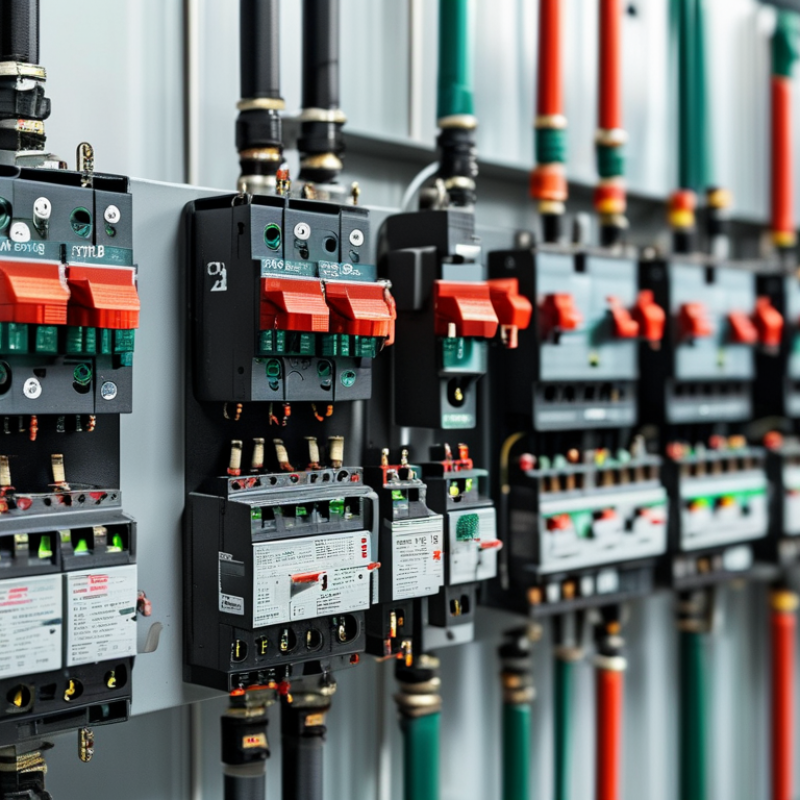
Air Breaker Fundamentals and Core Operating Principles
2026 Best Air Breaker Types for Global Buyers
Air breaker fundamentals begin with one simple idea: air extinguishes the arc created when contacts separate. During normal operation, current passes through closed main contacts. When a short circuit or overload occurs, the trip unit releases the operating mechanism. The contacts open rapidly, and an arc appears between them. Arc runners guide it into the arc chute. Inside, metal plates divide, cool, and deionize the arc until it stops at a current zero.
Modern air circuit breakers commonly use thermal-magnetic or electronic trip units. Electronic units offer adjustable long-time, short-time, instantaneous, and ground-fault protection. Fixed designs suit stable installations, while drawout designs allow safer inspection and faster replacement. The correct choice depends on rated current, breaking capacity, voltage, altitude, enclosure conditions, and coordination with downstream devices. A high rating alone does not guarantee dependable protection.
Tips: Check the real fault level, not only the normal load. Verify terminal temperature rise and maintenance access. Test trip settings after installation. Dust matters. Humidity matters too. A common mistake is trusting factory settings without reviewing the actual distribution system. That shortcut can cause nuisance trips or delayed fault clearing. I would also question any selection made without cable data, because the breaker and conductors must work as one protection system.
2026 Best Air Breaker Types for Global Buyers - Air Breaker Fundamentals and Core Operating Principles
Practical comparison of low-voltage air circuit breaker configurations, operating mechanisms, protection functions, and selection factors
| Air Breaker Type | Typical Installation | Common Current Range | Typical Voltage Class | Core Operating Principle | Main Protection Functions | Best-Fit Applications |
|---|---|---|---|---|---|---|
| Fixed-Frame ACB | Bolted directly into a low-voltage switchboard or panel. | Approximately 630–6,300 A, depending on the frame design and manufacturer. | Commonly up to 690 V AC in industrial and commercial systems. | When a fault is detected, the trip unit releases the operating mechanism. The contacts separate in air, while arc runners and arc chutes divide, cool, and extinguish the arc. | Long-time overload, short-time short circuit, instantaneous short circuit, and optional earth-fault protection. | Main incoming feeders, bus couplers, large industrial distribution boards, and generator connections. |
| Draw-Out ACB | Mounted on a cradle with connected, test, and disconnected positions. | Approximately 630–6,300 A, subject to frame size and rated current. | Commonly up to 690 V AC; higher system ratings require specific equipment verification. | The breaker can be electrically isolated without removing it from the switchboard. Primary and secondary disconnects allow testing and maintenance in the withdrawn position. | Adjustable long-time, short-time, instantaneous, and earth-fault protection; optional zone-selective interlocking. | Critical facilities, data centers, hospitals, utilities, and systems requiring rapid maintenance or replacement. |
| Manual-Operating ACB | Fixed or draw-out installation with local mechanical control. | Approximately 630–6,300 A. | Typically up to 690 V AC. | A spring or stored-energy mechanism is charged and released manually. The contacts close or open through the mechanism, while the trip unit opens the breaker automatically during a detected fault. | Usually includes overload and short-circuit protection; earth-fault and other functions depend on the trip unit. | Standard distribution systems where local operation is sufficient and remote switching is not required. |
| Electrically Operated ACB | Fixed or draw-out installation with motor charging and shunt or undervoltage releases. | Approximately 630–6,300 A. | Typically up to 690 V AC. | An electric motor charges the closing spring. A closing release closes the contacts, while a shunt-trip release or undervoltage release opens the breaker when commanded or when control voltage conditions require it. | Overload, short circuit, earth fault, remote trip, undervoltage release, and optional under/overvoltage functions. | Automatic transfer systems, generator synchronization, energy-management systems, and remotely controlled substations. |
| Thermal-Magnetic Air-Break Device | Usually used in compact low-voltage air-break molded-case designs rather than large power ACBs. | Commonly from a few amperes to approximately 1,600 A, depending on the frame and construction. | Commonly up to 600–690 V AC, depending on the applicable standard and product design. | A bimetal element responds to sustained overload heating, while a magnetic element responds rapidly to high short-circuit current. Both mechanisms open the contacts in air. | Thermal overload and magnetic short-circuit protection; earth-fault protection is not inherent unless separately provided. | Feeder circuits, motor branches, lighting distribution, and general low-voltage panel protection. |
| Electronic-Trip ACB | Fixed or draw-out switchgear, generally for high-current distribution. | Approximately 630–6,300 A, with adjustable settings based on the selected frame and sensor rating. | Commonly up to 690 V AC. | Current sensors measure phase current and send signals to an electronic trip unit. The trip unit compares the measured values with programmed thresholds and activates the opening mechanism when required. | Long-time, short-time, instantaneous, and earth-fault protection; metering, alarms, communications, and event recording may be available. | Power distribution with coordination, selectivity, energy monitoring, and advanced maintenance requirements. |
| Current-Limiting Air-Break Design | Specialized low-voltage equipment installed where prospective fault current is high. | Varies widely; selection depends on the rated current and tested interrupting performance. | Commonly low-voltage AC systems up to approximately 690 V. | Contact geometry and arc-control components increase the speed of current interruption and limit the peak let-through current and associated thermal and mechanical stress. | Short-circuit interruption with conventional overload and optional earth-fault functions. | High-fault-level switchboards, industrial plants, transformer secondaries, and installations requiring reduced fault energy. |
| Air Circuit Breaker with Zone-Selective Interlocking | Coordinated switchboards with multiple protection levels. | Typically 630–6,300 A. | Commonly up to 690 V AC. | Trip units exchange restraint or coordination signals. The breaker nearest the fault can trip with a short intentional delay, while upstream breakers remain closed when their protection is not required. | Long-time, short-time, instantaneous, earth-fault, and zone-selective interlocking functions. | Large commercial buildings, manufacturing plants, infrastructure, and systems requiring improved selectivity. |
| Generator-Protection ACB | Generator output switchboards and synchronizing panels. | Selected to match generator full-load current; commonly hundreds to several thousand amperes. | Typically 400–690 V AC for low-voltage generator systems. | The breaker connects or disconnects the generator from the bus. Its trip unit and control circuits coordinate with generator protection, synchronization, reverse-power, and automatic-transfer functions. | Overload, short circuit, earth fault, undervoltage, reverse power, and other functions through dedicated protection and control systems. | Standby generators, prime-power systems, microgrids, and parallel-generation installations. |
Selection note: Actual ratings, breaking capacities, withstand values, dimensions, trip-unit features, and operating categories vary by design and certification. Global buyers should verify the applicable requirements of IEC 60947-2, UL 489 or UL 1066, local installation codes, system voltage, frequency, short-circuit current, altitude, ambient temperature, and coordination study before purchase.