2026 Best PVC Clear Sheet Applications and Benefits?
In the evolving world of material applications, PVC Clear Sheet stands out for its versatility and functionality. John Smith, a renowned expert in the plastic industry, states, "PVC Clear Sheets are transforming how industries approach transparency and durability." This innovative material is gaining traction across numerous sectors, including construction, signage, and display solutions.
One notable advantage of PVC Clear Sheet is its lightweight nature. It allows for easy handling and installation. Its crystal-clear properties ensure optimal visibility, making it a favored choice for display cases and protective barriers. However, a common error in using PVC Clear Sheet is underestimating its limitations. While it offers durability, it can warp under extreme temperatures. Users must consider these factors carefully.
Another aspect worth reflecting on is the potential for environmental impact. PVC production has raised concerns over sustainability. While its applications are vast, there is a growing need for eco-friendly alternatives. As industries shift towards greener practices, exploring sustainable options becomes essential. The journey of adapting PVC Clear Sheets in 2026 and beyond calls for balanced innovation and responsibility.
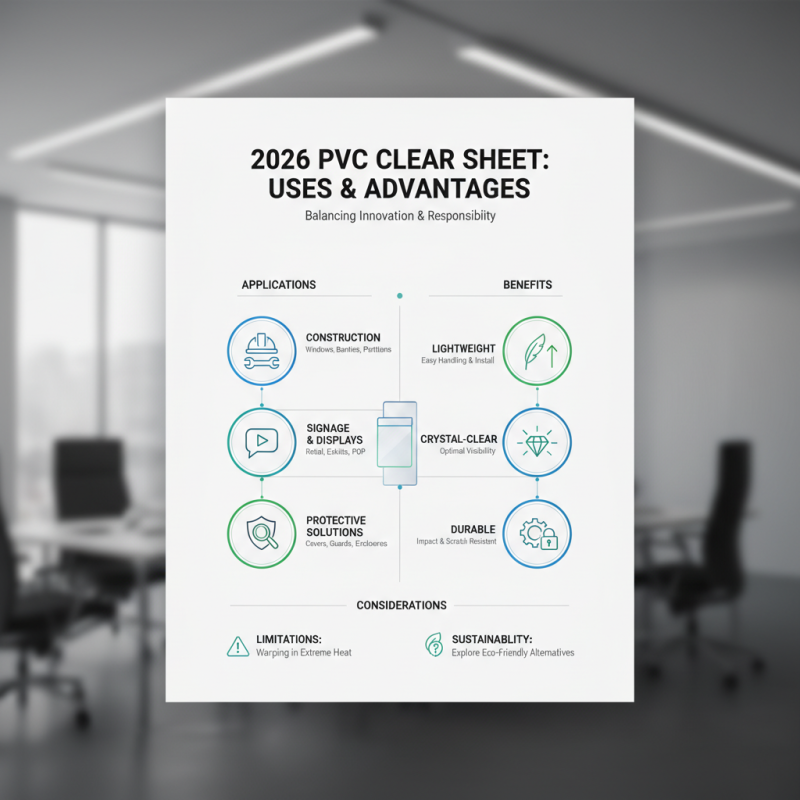
Overview of PVC Clear Sheets and Their Characteristics
PVC clear sheets are widely used in various industries due to their unique characteristics. These sheets are lightweight and durable. They offer excellent transparency, making them ideal for applications where visibility is crucial. Additionally, they are resistant to chemicals and weather, which enhances their usability outdoors.
One notable feature of PVC clear sheets is their versatility. They can be easily cut, shaped, and fabricated to fit specific needs. They are often used in construction, signage, and protective barriers. However, some users may encounter issues with UV degradation over time. This can lead to a yellowing effect, diminishing clarity. Also, while they are generally easy to work with, improper handling may cause stress fractures.
Furthermore, PVC sheets can be difficult to recycle. Their environmental impact raises concerns that should be addressed. Users are encouraged to consider sustainable alternatives when possible. Balancing performance needs with environmental responsibility is a challenge. Exploring new materials may lead to better, more sustainable solutions in the future.
Common Applications of PVC Clear Sheets in Various Industries
PVC clear sheets are widely used across different sectors. One notable area is in the construction industry. They serve as protective barriers on building sites. Their transparency allows for natural light while keeping dust and debris contained. This dual functionality boosts construction efficiency. However, some companies overlook proper installation, which can lead to costly mistakes.
In the healthcare industry, PVC clear sheets are common in medical facilities. They are used for privacy screens and portable enclosures. This usage helps create a safe environment for patients. Still, not all facilities ensure the right thickness or clarity of the sheets. This can impact the effectiveness during critical procedures.
Retail spaces also benefit from PVC clear sheets. They provide a hygienic solution for display cases, protecting products without obstructing visibility. This enhances customer experience. Yet, some shops fail to maintain these sheets, leading to scratches and a decrease in aesthetic appeal. Each industry uses PVC clear sheets uniquely, but attention to detail is crucial.
Applications of PVC Clear Sheets in Various Industries
Benefits of Using PVC Clear Sheets Over Other Materials
PVC clear sheets have gained popularity due to their numerous benefits over other materials. One significant advantage is their excellent clarity. According to a recent industry report, PVC offers 90% light transmittance. This makes it a top choice for applications needing visual transparency, such as display covers and safety barriers.
Another key benefit is durability. PVC sheets are resistant to chemicals, moisture, and UV light. This resistance extends their lifespan significantly compared to glass and acrylic alternatives. Some studies suggest that well-maintained PVC can last up to 20 years, even in adverse conditions. This longevity translates to savings in replacement costs and maintenance.
Tips: When selecting PVC clear sheets, consider thickness and coating options for optimal performance. Sometimes people overlook these details and end up with too thin a sheet, leading to unwanted damage. Additionally, remember that while PVC is robust, it can scratch easily. Use protective films during transport to avoid marks.
In certain applications, PVC clear sheets may fall short. While they are lightweight, they can warp under extreme heat. This can be an issue for outdoor installations. Proper planning and consideration of environmental factors are essential for success.
2026 Best PVC Clear Sheet Applications and Benefits
| Application | Benefits | Comparative Advantage |
| Protective Coverings | Durable, lightweight, and cost-effective protection | More impact-resistant than glass |
| Signage | High clarity and UV resistance | More flexible and easier to install than acrylic |
| Display Cases | Transparent and enhances product visibility | Lightweight, reducing shipping and handling costs |
| Window Glazing | Improves insulation and reduces noise | Safer and shatter-resistant compared to glass |
| Furniture Protection | Prevents scratches and moisture damage | More versatile than traditional wood laminates |
Factors to Consider When Choosing PVC Clear Sheets
When selecting PVC clear sheets, consider thickness. The right thickness impacts durability and flexibility. A common choice is between 0.5mm and 3mm, depending on the project. Thicker sheets offer better protection but can be heavier. Lightweight sheets are easier to handle but may not withstand heavy impact.
Another crucial factor is clarity. High-quality PVC sheets provide excellent transparency. They are perfect for displays and enclosures. Look for sheets with consistent optical qualities. Ensure they don’t distort visuals. Also, consider UV resistance, especially for outdoor applications. UV-resistant sheets prevent yellowing and maintain clarity over time.
Cost is always a factor. While it’s tempting to choose cheaper options, evaluate long-term benefits. Inexpensive sheets may save money upfront but can lead to more frequent replacements. Investing in quality pays off with better performance. Availability is important too; some types may be harder to find. It’s beneficial to have a reliable supplier. Test samples when possible, as not all sheets perform the same. This attentive approach leads to better project outcomes.
Future Trends in PVC Clear Sheet Innovations and Uses
The PVC clear sheet market is rapidly evolving. Innovations have made these sheets versatile in various applications. According to a recent market analysis, the demand for PVC clear sheets is projected to grow by 6.5% annually through 2026. This increase reflects their expanding use in construction, signage, and packaging. Manufacturers are experimenting with anti-fogging and UV-resistant features, enhancing functionality.
Sustainability is becoming a major focus. Reports indicate that consumers increasingly prefer eco-friendly materials. However, the production process still faces criticism. Many PVC sheets come from fossil fuels, raising concerns about their environmental impact. Even so, advancements in recycling technologies are being explored. Some companies are actively working on closed-loop systems to repurpose used materials.
These future trends are promising but also challenge the industry. Balancing performance with eco-responsibility is essential. As demand grows, so does the pressure for sustainable practices. Innovations in PVC clear sheets may offer solutions, but not without trade-offs. It's a complex landscape that requires thoughtful navigation.
