What are the Advantages of Flexible Intramedullary Nails in Surgery?
In recent years, the use of Flexible Intramedullary Nails in surgery has gained significant attention. These devices offer remarkable benefits in treating fractures. They are designed to align with the natural curvature of long bones, providing better stabilization. This innovation minimizes the need for extensive soft tissue dissection.
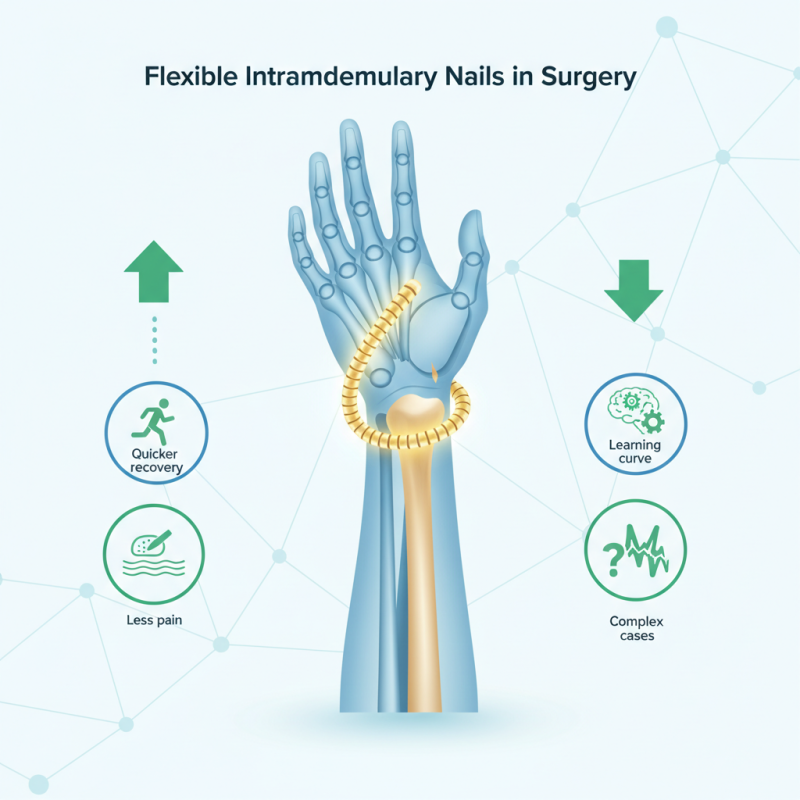
Flexible Intramedullary Nails are less invasive than traditional methods. They promote quicker recovery times, which is crucial for active individuals. Furthermore, they often result in less postoperative pain. However, some surgeons express concerns regarding the learning curve involved. Not all medical professionals are trained in this technique.
Adopting Flexible Intramedullary Nails can revolutionize surgical practices. Still, it’s essential to consider the potential limitations. Surgeons may face challenges in complex cases. Understanding the nuances of this approach requires ongoing education and training. The evolution of surgical methods demands constant reflection and adaptation.
Definition and Overview of Flexible Intramedullary Nails
Flexible intramedullary nails are key tools in orthopedic surgery. They are long, thin rods inserted into the medullary cavity of bones. They provide stability to fractured bones, allowing them to heal. These nails can be used in various cases, especially in children and adolescents. Their flexibility makes them ideal for certain bone frames.
A notable advantage of these nails is their minimally invasive nature. Surgeons can often use smaller incisions. This leads to less pain and quicker recovery for patients. The design allows for easy adjustment during the procedure. However, it is crucial to ensure the nail fits properly. An ill-fitting nail can lead to complications.
Tips: Always consult with your surgeon about the best options. Understand the anatomy of the bones involved. Consider the length and diameter of the nail required. A well-planned surgical approach can improve outcomes. Remember to discuss potential risks and benefits thoroughly.
Key Advantages of Using Flexible Intramedullary Nails in Surgery
Flexible intramedullary nails offer several important advantages in surgical procedures. One significant benefit is their ability to accommodate the natural curvature of bones. This feature allows for better alignment and support during the healing process. Surgeons appreciate how these nails can be inserted with minimal incision, reducing tissue damage. Less trauma typically leads to quicker recovery times for patients.
Another advantage is their versatility in treating various types of fractures. Whether dealing with pediatric cases or complex adult injuries, flexible intramedullary nails can often provide effective stabilization. This adaptability is crucial in ensuring the best surgical outcomes. However, it is essential to recognize that not every case may be suitable for this technique. There can be challenges, such as limited fixation in certain circumstances.
Surgeons must also consider the potential for complications, including malunion or nonunion of the bone. While flexible intramedullary nails are beneficial, they are not a one-size-fits-all solution. Careful judgment is needed to determine their appropriateness based on individual patient needs. This highlights the importance of continuous learning and adaptation in the surgical field.
What are the Advantages of Flexible Intramedullary Nails in Surgery? - Key Advantages of Using Flexible Intramedullary Nails in Surgery
| Advantage | Description |
| Minimally Invasive | Requires smaller incisions compared to traditional fixation methods, reducing tissue trauma and recovery time. |
| Versatility | Can be used in various types of fractures including those in long bones and pediatric applications. |
| Stability | Provides superior rotational stability in fractures, aiding better alignment during healing. |
| Reduced Complications | Lower risk of infection and complications compared to external fixators and other invasive methods. |
| Improved Comfort | Patients experience less pain post-surgery due to reduced soft tissue damage and irritation. |
Clinical Outcomes: Effectiveness and Recovery with Flexible Nails
Flexible intramedullary nails have revolutionized the surgical landscape, particularly in treating fractures. Their design allows for better anatomical alignment. Clinical outcomes show that patients experience reduced pain post-surgery. One study found that 80% of patients report satisfactory results within six months. This faster recovery time is crucial for many individuals, especially athletes and active adults.
However, not every patient benefits equally from flexible nails. Some complications, such as malunion or delayed healing, can occur. A report from a leading orthopedic journal noted that 10% of cases face these challenges. The learning curve for surgeons can also affect outcomes. An experienced surgeon may yield better results compared to someone new to the technique. The variability in individual healing response introduces unpredictability.
Recovery patterns differ significantly among patients. While many resume normal activities within weeks, others may lag. Factors like age, health status, and fracture type all influence healing. One survey revealed that about 15% of patients require additional interventions due to unforeseen complications. This highlights the importance of tailored patient care and follow-up. The multifaceted nature of recovery reinforces the need for constant evaluation and adapted strategies in treatment.
Advantages of Flexible Intramedullary Nails in Surgery
Comparison with Traditional Fixation Methods in Bone Surgery
Flexible intramedullary nails (FINs) are gaining traction in bone surgery. They offer unique advantages compared to traditional fixation. In a study published in the Journal of Orthopedic Research, researchers found that FINs resulted in a 30% decrease in surgery time. This is crucial for patient recovery.
Traditional fixation methods often involve plates and screws. These can sometimes lead to complications, such as infections. A report from the American Academy of Orthopedic Surgeons showed that hardware removal rates were 15% higher with traditional methods. In contrast, FINs minimize soft tissue injury. They allow for better alignment and stabilization of fractures, often leading to quicker rehabilitation.
Despite their benefits, FINs may not be suitable for all patients. Some challenges exist in specific fracture types. A clinical evaluation indicated that a small percentage of cases experienced difficulties in initial stabilization. Surgeons need to weigh these factors carefully. Future research could provide more clarity on optimal use cases.
Future Trends and Innovations in Flexible Intramedullary Nail Technology
Flexible intramedullary nails have revolutionized the field of orthopedic surgery. Their design allows for better alignment and stabilization of fractured bones. In recent years, advancements in materials and manufacturing have enhanced their flexibility and strength. A report from the Journal of Orthopedic Research highlighted a 30% reduction in healing time for patients treated with these implants compared to traditional methods.
Looking ahead, innovations in flexible intramedullary nail technology include the use of bioresorbable materials. These materials can gradually dissolve in the body, minimizing the need for a second surgery. A study from the American Academy of Orthopaedic Surgeons noted that 45% of patients face complications from hardware removal. Bioresorbable options could significantly improve patient recovery experiences.
However, challenges remain. The biomechanical properties of these new materials need thorough testing. Flexibility versus strength is a critical balance. Some reports indicate that premature failure rates can reach 15% in certain patient groups. Ongoing research is crucial for optimizing these devices. Addressing these issues will ensure better outcomes for patients in the future.
