50% Response rate
Choosing suitable explosion-proof lighting is not just a matter of brightness. In oil and gas facilities, chemical plants, and dusty industrial areas, a light must match the hazards and conditions where it will operate. Temperature, dust, moisture, vibration, and maintenance access all matter. Details matter.
This guide explores Top China ATEX IECEx Certified Explosion Proof LED Lights and the features buyers should compare. It covers the meaning of ATEX and IECEx documentation, protection ratings, light output, color temperature, housing materials, and installation requirements. The phrase atex iecex certified explosion proof led describes a category, not a guarantee that every product or configuration has the same approvals. Check the certificates and product markings for the exact model.
A careful selection starts with the area classification and the site’s operating conditions. Then compare technical data sheets, certificate scope, temperature class, ambient-temperature range, and manufacturer support. A stainless-steel body may suit a corrosive location, while a compact floodlight may better illuminate a loading bay. The best choice is not always the brightest one. It is easy to overlook installation details when comparing prices, and that deserves a second look. Verify that the proposed fixture fits the project requirements before purchase, and consult qualified professionals when specifications are unclear. This practical review aims to help buyers ask better questions, spot gaps in product information, and choose lighting with greater confidence.
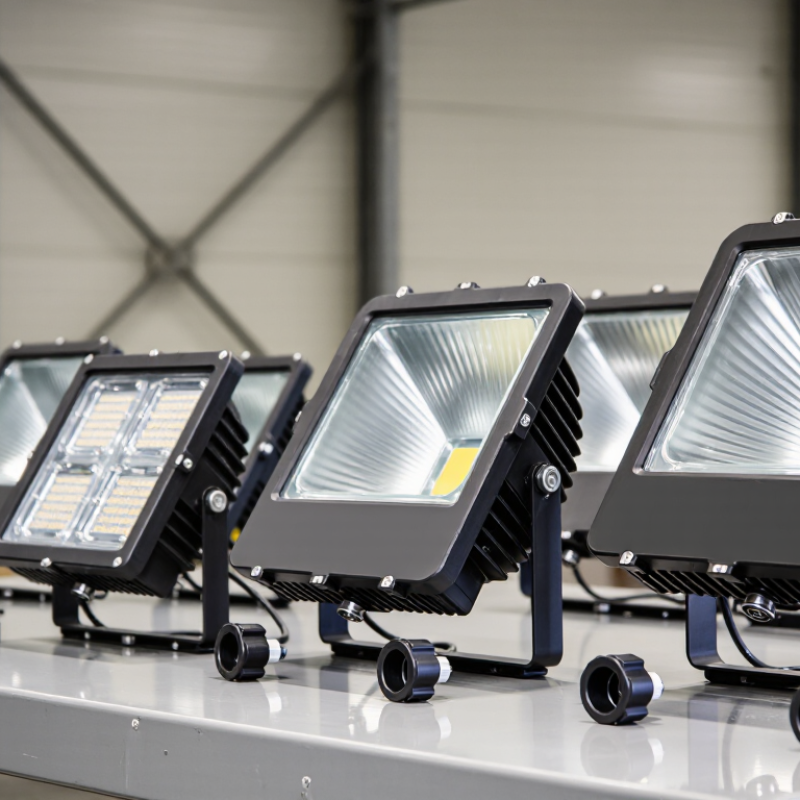
ATEX and IECEx are related, but they are not the same. ATEX refers to European Union requirements for equipment used in potentially explosive atmospheres. IECEx is an international certification system based on IEC standards, including the IEC 60079 series. Both assess whether equipment is suitable for defined hazards, but an IECEx certificate does not automatically replace local legal approval.
For explosion-proof LED lights, certification is only one part of the selection. The hazardous-area zone, gas or dust group, temperature class, ambient temperature range, and ingress protection rating must match the actual site. A light rated for gas hazards may not be suitable for combustible dust. In its 2006 Combustible Dust Hazard Study, the U.S. Chemical Safety Board recorded 281 incidents, 119 deaths, and 718 injuries from 1980 to 2005. These figures cover dust incidents broadly, not lighting failures, but they show why equipment selection and site controls matter.
Tips: Check the certificate and product marking against the site’s hazardous-area classification. Confirm installation and maintenance requirements with a qualified professional. A certificate helps; it is not a magic shield. That distinction is easy to overlook.
Explosion-proof lighting needs more than a rugged housing. ATEX and IECEx certification assess whether a specific light is suitable for defined hazardous atmospheres. The assessment considers factors such as gas or dust type, equipment protection level, temperature limits, and operating conditions. A fixture approved for one zone may not be suitable for another.
ATEX sets requirements for equipment intended for explosive atmospheres in the European Union. IECEx is an international certification scheme that helps buyers compare independently assessed equipment. They are related, but not interchangeable. IECEx certification does not automatically replace local approval requirements, and ATEX compliance should be checked for the intended market. Read the marking closely. Details matter.
For a lighting installation, verify the certificate against the exact model, not just a product family name. Check its Ex marking, ambient temperature range, ingress protection, and permitted cable entries. A hot lens or unsuitable gland can undermine an otherwise careful installation. The certificate also does not assess every site condition; mounting position, wiring, and maintenance still matter. I have seen teams focus on the housing and overlook the cable connection. That is easy to miss. Ask for current certificates and installation instructions, then compare them with the hazardous-area classification and site conditions.
An ATEX- or IECEx-certified LED light is more than an efficient chip inside a sturdy housing. Its protection depends on the complete, tested configuration. The enclosure, cover joints, cable entries, and terminal block all matter. Flame paths must be manufactured to specified dimensions, while seals help resist dust and moisture. Fit matters. So does testing. The nameplate should show the equipment’s ratings and approval details, which installers can compare with the actual site conditions.
Thermal management is another key design feature. A finned aluminum body can move heat away from the LED board and driver, helping control operating temperatures. The driver should match the light source and the unit’s rated supply conditions. Tough glass or a protective lens can handle routine impacts, but it still needs inspection for cracks or loosened fasteners. One detail is easy to miss: an unsuitable cable gland may compromise the approved configuration. A checklist helps, but it cannot replace checking the certificate, product markings, and installation instructions together. No single feature tells the whole story.
| Component or Design Feature | Typical Design Details | Safety or Performance Purpose | What to Check in Product Documentation |
|---|---|---|---|
| Explosion-protection concept | Depending on the product and intended use, a luminaire may use flameproof enclosure protection, increased safety, or a combination of protection concepts. | Controls the risk of an internal ignition source igniting a surrounding explosive atmosphere. | Check the complete Ex marking and certificate for the exact model; protection concepts and permitted applications are model-specific. |
| Enclosure and flamepaths | Robust metal enclosures and, where flameproof protection is used, engineered joints designed and tested as part of the certified enclosure. | Provides mechanical protection and, in applicable designs, contains an internal explosion and prevents flame transmission. | Confirm the enclosure material, protection concept, installation instructions, and any restrictions on opening or maintenance. |
| LED light source and circuit board | LED arrays mounted on a circuit board or metal-core board, with optical output and electrical configuration selected for the luminaire. | Produces light efficiently while allowing heat to be transferred away from the LEDs. | Review rated input, light output, colour characteristics, operating temperature range, and any replacement-part requirements. |
| Optical cover or lens | Impact-resistant glass or another material specified in the certified design; optical elements may be sealed or retained by a defined assembly. | Protects the light source and distributes light for the intended task. | Check the specified cover material, impact rating, cleaning guidance, and whether replacement covers must be approved parts. |
| Thermal management | Heat-dissipating housing or heat sink, with LED and driver temperatures controlled within the design limits. | Supports component life and helps the complete luminaire meet its certified temperature class or maximum surface-temperature limits. | Verify the stated ambient-temperature range and temperature marking for the exact configuration. |
| LED driver and electrical protection | Driver circuitry matched to the LED load, with protection features and component selection evaluated as part of the certified luminaire. | Supplies controlled power and helps protect against specified electrical or thermal fault conditions. | Check supply voltage and frequency, power consumption, power factor where specified, and permitted driver or component replacements. |
| Gaskets and seals | Seals fitted at designated enclosure interfaces and selected for the environmental and temperature conditions of the product. | Helps limit ingress of dust and water when used and maintained as instructed. | Check the declared IP rating, seal inspection guidance, and any requirements for replacement after opening. |
| Cable entries and terminals | Certified or otherwise suitably approved cable-entry arrangements and terminals, with compatible cable glands selected for the installation. | Maintains the intended protection of electrical connections and enclosure entries. | Confirm thread type, cable range, entry protection requirements, terminal capacity, and any unused-entry closure requirements. |
| Earthing and bonding | Protective-earth connection points and bonding provisions as specified by the luminaire design and installation instructions. | Supports electrical safety and equipotential bonding where required by the installation. | Follow the product wiring diagram and local electrical regulations; do not assume earthing arrangements are identical across models. |
| ATEX and IECEx certification information | Product documentation may include an ATEX marking and an IECEx certificate reference when the specific model has the relevant approvals. | Identifies the assessed equipment, protection level, gas or dust group, and applicable operating conditions. | Match the nameplate, certificate number, equipment type, and special conditions of use to the exact product and installation. |
| Ingress protection and environmental suitability | IP ratings such as IP66 or IP67 may be specified for particular luminaire designs; ratings are not universal to all products. | Indicates tested resistance to dust ingress and water exposure under defined test conditions. | Check the exact IP rating and environmental limits in the product datasheet; an IP rating is not a substitute for Ex certification. |
| Installation, inspection, and maintenance | Instructions define mounting, wiring, inspection, permitted servicing, and approved replacement parts. | Helps preserve the certified design and safe operation throughout the product’s service life. | Use the manufacturer’s instructions for the exact model and have installation and maintenance carried out by suitably competent personnel. |
Note: Certification, markings, temperature limits, ingress ratings, and component specifications vary by model and configuration. Always verify the product nameplate, current certificate, and installation instructions before selection or use.
Explosion-proof LED lighting supports work in locations where flammable gas, vapour, or combustible dust may be present. Typical settings include petrochemical processing areas, grain handling facilities, paint rooms, and wastewater plants. In each space, the luminaire must suit the actual hazard classification, not merely the industry name. ATEX or IECEx certification can help verify suitability, but buyers should also check the equipment protection level, temperature class, and dust or gas group.
Small details matter. A low-ceiling pump room may need a different beam pattern from a wide storage bay. At loading points, sturdy housings and suitable ingress protection help resist dust, moisture, and regular cleaning. Good LED output can improve visibility around gauges and walkways while reducing lamp changes at difficult access points. Still, bright light alone does not make a safe installation.
A layout that looks clear on paper can leave shadows behind pipes or above a control panel. Review mounting height, glare, emergency lighting needs, and maintenance access before installation. Qualified personnel should confirm that the selected fixture and wiring method match the site assessment. Conditions also change: new processes or ventilation equipment may alter the original risk picture. Inspect fittings routinely, and treat damaged seals or loose glands as reasons to pause and reassess.
Top China ATEX IECEx Certified Explosion Proof LED Lights
Evaluating a Chinese manufacturer starts with the exact product certificate, not a factory’s general claim. Search the certificate number in the official IECEx online system, then match the model, protection concept, gas or dust group, temperature class, and ambient range. For ATEX equipment, request the EU Declaration of Conformity and verify the notified-body details where applicable. A certificate for one housing does not automatically cover every wattage or lens option. Small mismatch, big risk.
Ask for the quality-system evidence behind production. IECEx equipment certification uses quality-assessment requirements, including those in ISO/IEC 80079-34. Check that production audits cover the actual assembly site, and ask how changes to drivers, seals, or cable entries are controlled. Review test reports for thermal performance and ingress protection, then compare them with the datasheet. A sample inspection can reveal loose glands, uneven gasket compression, or unreadable nameplates. I would pause if test documents show a different model code.
Safety context matters, but statistics need careful interpretation. The International Labour Organization estimated 2.93 million work-related deaths worldwide in 2019, reported in its 2023 publication on safer and healthier working environments. That figure is not specific to hazardous-area lighting; it does underline why traceable evidence matters. Ask the supplier for serial-level records and a clear route for replacement parts. Paperwork can still mislead. Verify it.