How to Choose the Right Hinged Knee Brace for Support?
Choosing the right Hinged Knee Brace is crucial for anyone seeking knee support. "A proper hinged knee brace can significantly enhance recovery and provide necessary stability," says Dr. Emily Carter, a leading orthopedic specialist. Her experience underscores the importance of selecting the right brace.
Many individuals struggle to navigate the options available. Factors like size, material, and function play a significant role. If these elements do not align with your needs, the brace may not help you heal. A brace that is too loose or tight can cause discomfort or impede movement. This highlights the necessity of understanding your specific condition before making a purchase.
Additional considerations include the level of activity you plan to engage in while wearing the brace. Whether for rehabilitation or everyday use, each scenario requires different support. It’s essential to reflect on your personal experience with knee issues to find a brace that offers both comfort and protection. Taking the time to research and consult professionals may help avoid common pitfalls in choosing a hinged knee brace.
Understanding the Different Types of Hinged Knee Braces Available
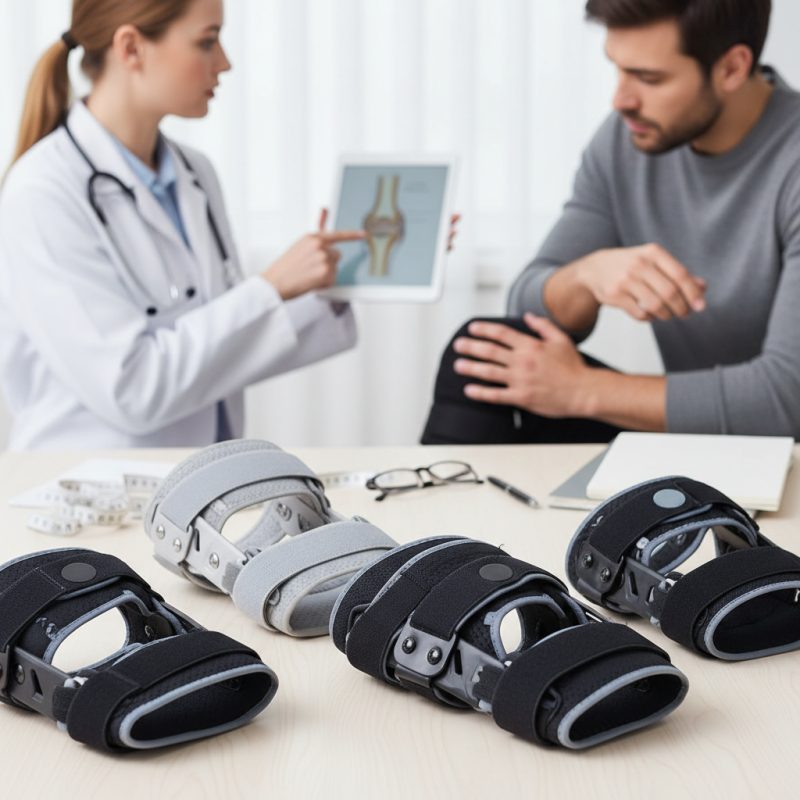
When selecting the right hinged knee brace, understanding the options available is crucial. Hinged knee braces come in various designs tailored for specific needs. Rigid braces provide maximum support for severe injuries. These braces can limit movement but are ideal for recovery. They offer stability for post-surgery patients or individuals with significant knee instability.
Then, there are lightweight models. These braces allow for more mobility while still providing essential support. They are perfect for active individuals looking to prevent injuries while engaging in sports. Adjustable features can enhance comfort and ensure a snug fit.
Tips: Always assess your activity level. An athlete may require a different brace than someone focused on rehabilitation. Look for adjustable straps. They can help customize the fit, enhancing both comfort and support. Lastly, consult with a healthcare professional. They can provide recommendations based on your specific condition, ensuring you make an informed choice.
Evaluating the Level of Support Needed for Your Knee Condition
When choosing a hinged knee brace, it's crucial to evaluate the support level required for your specific knee condition. According to a study published in the Journal of Orthopedic Research, about 25% of adults will experience knee issues at some point. This statistic highlights the necessity of proper support for various conditions. A hinged knee brace can effectively stabilize the knee and reduce the risk of further injury, yet the degree of support fluctuates significantly.
Understanding your needs is essential. For moderate injuries, a brace with adjustable hinges offers flexibility and movement control. Research indicates that these braces can facilitate functional recovery by 30% compared to non-hinged counterparts. Conversely, in cases of severe ligament damage, a reinforced brace providing maximum stabilization may be necessary. Over-reliance on a brace, however, may weaken the surrounding muscles over time. Observing how your body reacts is vital. Take note of comfort levels and adjust your choice accordingly.
Evaluating the level of support needed involves both medical advice and personal experience. Often, users report that consultation with a healthcare professional leads to better outcomes. Yet, many individuals overlook this step, opting instead for self-diagnosis. Balancing professional guidance with personal comfort can be challenging, but the benefits of finding the right brace are invaluable. Seek continuous feedback from your body and adapt when necessary.
Measuring Your Knee for Proper Brace Fit and Comfort
Measuring your knee correctly is crucial for finding the right hinged knee brace. A well-fitted brace offers better support, comfort, and stability. To start, use a soft measuring tape. This allows for accurate measurements around the knee joint. It is best to measure while standing, as this can help capture your knee's natural shape.
Focus on two key dimensions: the circumference of the knee and the length of the brace. Place the tape around the center of your kneecap. Note this measurement down. Next, consider the length of the brace needed. Measure from the top of your thigh to below the knee, making sure to account for your typical range of motion.
Choosing a brace that fits too tightly can lead to discomfort and restrict blood flow. On the other hand, an overly loose brace may not provide enough support. It’s a balancing act. After measuring, it's wise to try on different styles to find the one that aligns with your needs. Remember, the right brace can make all the difference in your recovery and performance. Measured properly, your brace can support you effectively during activities.
How to Choose the Right Hinged Knee Brace for Support?
Assessing Materials and Features in Hinged Knee Braces
When selecting a hinged knee brace, consider the materials. High-quality neoprene offers warmth and compression. It also enhances circulation, benefiting recovery. Breathable mesh panels can be important. They help keep the knee cool and prevent moisture buildup during activity. A balance of support and comfort is crucial for successful use.
Features vary widely in these braces. Adjustable straps allow for a customized fit. This prevents slippage during movement. Check for the range of motion customization. Some braces limit movement for stability, while others allow flexibility. Find a brace that fits your lifestyle, whether for sports or daily activities.
It’s essential to reevaluate your options regularly. Different activities may require different levels of support. You might discover that an adjustment in material or feature leads to better performance. Listen to your body; if discomfort arises, it’s time to reassess. Choose wisely, as the right brace can significantly impact recovery and performance.
Considering Activity Level and Usage When Choosing a Brace
Choosing the right hinged knee brace involves understanding your activity level and usage requirements. The type of brace you need varies across sports and daily routines. A report from the National Athletic Trainers' Association indicates that athletes participating in high-impact sports often benefit from robust knee support. These individuals might need braces with more stability features, while casual users may prefer lightweight options.
The level of support you require depends on your activities. For example, a survey by the American Academy of Orthopaedic Surgeons shows that 72% of recreational athletes use braces for injury prevention. This statistic highlights the importance of finding a brace tailored to your needs. A heavy-duty brace might be cumbersome for someone who mainly walks or engages in low-impact activities. Understand your body’s demands to select a brace that aligns with your lifestyle.
Consider also the durations for which the brace will be worn. Wearing a brace for extended periods can cause discomfort or restricted movement. Reports suggest that even the most reliable braces can lead to muscle weakness if used excessively. Identify how the brace will affect your performance. Finding the balance between support and freedom of movement is crucial for effective usage.
