50% Response rate
Choosing the best Ginseng Capsules for wholesale requires more than comparing prices or counting capsules. Buyers need a clear quality framework. Product decisions should begin with the ginseng species, plant part, growing region, cultivation method, and extraction process. Asian ginseng, American ginseng, and Siberian ginseng are not interchangeable. Their active compounds and traditional uses differ.
Mark Blumenthal, founder of the American Botanical Council, has often emphasized a practical principle: “Know your source before you trust the label.” That advice matters in wholesale purchasing. A dependable supplier should provide batch-specific certificates of analysis, identity testing, contaminant screening, and documented traceability. Check the stated ginsenoside content, not only the total capsule weight. Request evidence for heavy-metal, pesticide, microbial, and adulteration testing. Ask whether the results come from an independent laboratory.
Look closely at the bottle.
Packaging should protect capsules from moisture, heat, and light. Labels should show serving size, ingredients, lot number, expiry date, storage instructions, and the manufacturer’s contact details. Responsible suppliers avoid exaggerated medical claims and provide consistent documentation across batches. This protects retailers and customers.
Still, no checklist is perfect. A polished certificate can hide weak sourcing if nobody verifies it. Wholesale buyers should compare samples, inspect seals, review supplier history, and test a small order before scaling. Price matters, but unexplained discounts deserve questions. The strongest Ginseng Capsules program combines transparent evidence, stable supply, sensible claims, and careful human judgment. Reliability is built one batch at a time.
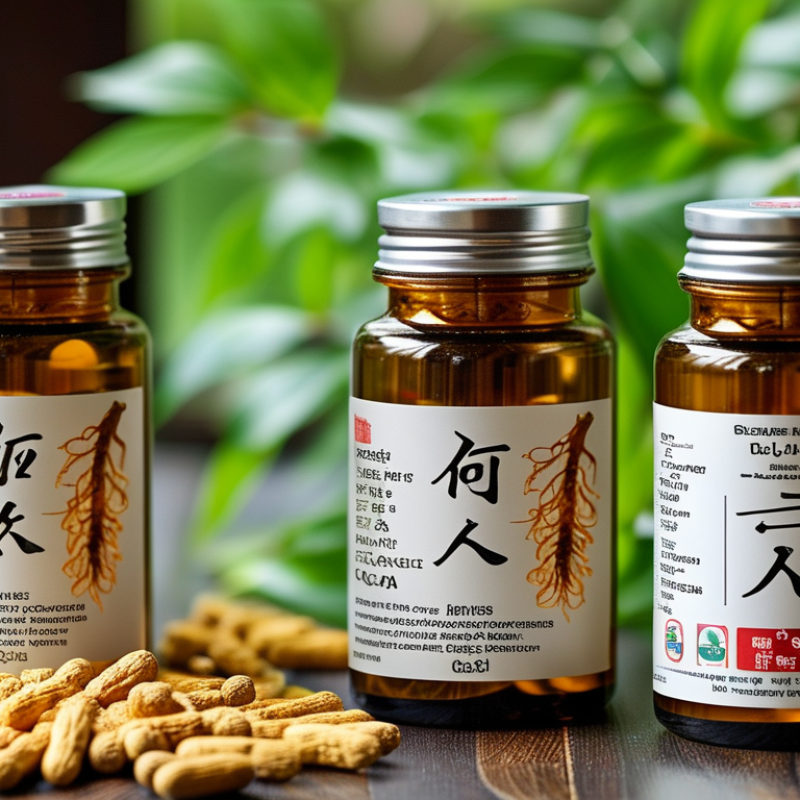
Wholesale buyers should begin with ginseng type, not capsule appearance. Asian ginseng, or Panax ginseng, is commonly selected for traditional vitality products. American ginseng is often positioned for a milder, cooling profile in traditional use. Siberian ginseng is different; it is not true Panax ginseng. This distinction affects labeling, sourcing, and customer expectations. Grand View Research estimated the global ginseng market at about USD 2.1 billion in 2023, with continued growth expected through 2030. That growth increases supplier choice, but also increases verification risks.
For wholesale applications, match the type to the sales channel. Asian ginseng may suit premium vitality capsules, while American ginseng can support wellness-focused formulations. Buyers should request botanical identity testing, ginsenoside profiles, moisture results, and contaminant screening. A certificate of analysis is useful, but it should be traceable to a specific batch. Check the details.
Capsule specifications also matter. Standardized extracts offer more consistent active-marker levels than ordinary powdered roots, although consistency does not prove clinical effectiveness. The World Health Organization’s monograph on Panax ginseng emphasizes correct identification and quality control. In practice, I would compare extraction ratios, capsule weight, excipients, packaging stability, and suggested serving size. Some suppliers promote high extract ratios without explaining the starting material. That deserves a closer question. Products should avoid disease-treatment claims and follow the destination market’s supplement regulations. Wholesale success depends on transparent evidence, not merely a higher ginsenoside number.
How to Choose the Best Ginseng Capsules for Wholesale?
Wholesale buyers should evaluate identity, purity, and potency before comparing prices. Ginseng species, root age, growing region, and extraction methods can change ginsenoside levels. A 2023 American Botanical Council HerbMarket Report estimated U.S. herbal supplement sales at approximately $12.6 billion in 2022. Strong demand increases the need for reliable batch control.
Request a certificate of analysis for every production lot. The report should show botanical identity, total ginsenosides, and key compounds such as Rb1, Rg1, and Rg3. High-performance liquid chromatography offers more useful evidence than a broad “standardized” claim. That phrase alone proves little. Check heavy metals, pesticides, microbial counts, and residual solvents through an ISO/IEC 17025-accredited laboratory. WHO quality-control guidance also supports identity testing, contamination screening, and documented sampling procedures.
Potency should remain consistent after encapsulation and storage. Review capsule weight variation, disintegration time, moisture exposure, packaging barriers, and stability data. A clear expiration date needs supporting evidence, not guesswork. I would also compare the declared dose with independent test results, because label accuracy can weaken across batches. Small details matter. Keep retained samples and audit manufacturing records before approving a large order. No checklist is perfect, and supplier documents may look convincing while missing critical test methods. That is where experienced review becomes necessary.
Wholesale evaluation matrix based on recognized quality-control practices and commonly referenced international testing standards
| Evaluation Dimension | What to Verify | Recommended Wholesale Benchmark | Typical Test or Evidence | Why It Matters | Decision |
|---|---|---|---|---|---|
| Botanical Identity | Scientific name, plant part, geographical source, and declared species. | Label should clearly identify the species, such as Panax ginseng or Panax quinquefolius, and state whether the material is root, root extract, or a combination. | Macroscopic and microscopic examination supported by HPTLC or another validated identity method. | Different Panax species have different ginsenoside profiles and should not be treated as interchangeable. | Accept only with documented identity. |
| Raw Material Form | Powdered root versus concentrated extract. | Require the native herb-to-extract ratio for extracts, for example 5:1 or 10:1, together with the extraction solvent and plant part. | Manufacturing specification, batch record, and certificate of analysis (COA). | An extract ratio alone does not establish potency; the measured ginsenoside content is also required. | Prefer complete extract documentation. |
| Ginsenoside Potency | Total ginsenosides and, where relevant, key individual compounds such as Rb1, Rg1, and Rd. | Use a clearly stated, lot-specific assay result. Do not accept “standardized” without a numerical percentage or amount per serving. | Validated HPLC or UPLC assay with chromatograms and an applicable reference standard. | Ginsenosides are the principal quality markers used to compare ginseng materials, but natural levels vary by species, age, plant part, and processing. | Compare only like-for-like assays. |
| Potency Calculation | Consistency between capsule fill weight, extract concentration, serving size, and declared ginsenoside amount. | Example calculation: 100 mg extract × 10% total ginsenosides = 10 mg total ginsenosides per capsule, before accounting for assay tolerances. | Review the formula, batch assay, average fill weight, and finished-product specification. | Prevents misleading comparisons between high-fill root powder and low-fill concentrated extract. | Reject unclear calculations. |
| Assay Consistency | Whether results remain within the approved specification across production lots. | Request at least three recent lot COAs and confirm that each lot complies with the same approved potency range. | Trend review of HPLC or UPLC results and finished-product release records. | One satisfactory sample does not demonstrate reliable wholesale supply. | Prefer stable multi-lot performance. |
| Heavy Metals | Lead, cadmium, arsenic, and mercury contamination. | Results should comply with the applicable market limit. ICH Q3D oral permitted daily exposures are 5 µg/day for lead, 5 µg/day for cadmium, 15 µg/day for inorganic arsenic, and 30 µg/day for mercury. | ICP-MS or ICP-OES test with results reported in mg/kg or µg/day and a clear serving-size calculation. | Contamination can originate from soil, water, processing equipment, or environmental exposure. | Require independent or accredited-laboratory evidence. |
| Pesticide Residues | Residues from agricultural production and storage. | Must comply with the maximum residue limits of the destination market; a broad multi-residue screen is preferable. | Validated GC-MS/MS and LC-MS/MS multi-residue analysis. | Legal limits differ by country, so destination-market compliance must be confirmed before import. | Check against the target market. |
| Microbial Safety | Total microbial count, yeast and mold, and specified pathogens. | Finished capsules should meet the applicable pharmacopoeial or food-supplement microbiological limits for the destination market. | USP <61> microbial enumeration and USP <62> specified microorganisms, or an equivalent validated method. | Botanical powders can carry environmental microorganisms if drying, handling, or storage is inadequate. | Require pathogen results per lot. |
| Aflatoxins | Aflatoxin B1 and total aflatoxins in the botanical material. | For markets applying European food limits, the commonly used limits are 2 µg/kg for aflatoxin B1 and 4 µg/kg for total aflatoxins in many food categories; confirm the exact product category. | HPLC with fluorescence detection or LC-MS/MS. | Improper drying or humid storage can encourage mold growth and toxin formation. | Use destination-specific limits. |
| Adulteration Control | Substitution with unrelated roots, undeclared stimulants, fillers, or undeclared pharmaceutical ingredients. | Require a documented authenticity program and a negative adulterant screen appropriate to the product risk. | HPTLC, DNA-based testing where suitable, microscopy, and targeted LC-MS screening. | Botanical identity testing and contaminant testing address different risks; both are necessary. | Do not rely on appearance alone. |
| Capsule Fill Uniformity | Variation in weight and active content between capsules. | Finished-product specifications should define average fill weight, individual-unit variation, and potency acceptance criteria. | Pharmacopoeial uniformity-of-mass or content-uniformity testing, depending on the regulatory classification. | Uniform capsules provide more consistent dosing for retailers and consumers. | Review finished-product release data. |
| Disintegration and Dissolution | Whether capsules open and release their contents as expected. | Set a validated disintegration specification suitable for the capsule shell and formulation; test dissolution when required by the applicable standard. | USP < disintegration and dissolution procedures or equivalent pharmacopoeial methods. | High assay results do not guarantee appropriate release from the capsule. | Prefer performance-tested products. |
| Moisture and Stability | Water activity, moisture content, shelf life, and storage conditions. | Require real-time or accelerated stability data supporting the stated shelf life, plus packaging that protects against moisture and light. | Moisture analysis, water-activity testing, and stability studies under defined conditions. | Humidity can affect capsule shells, microbial quality, flowability, and ginsenoside stability. | Require stability support. |
| Capsule Shell Quality | Shell material, allergen status, appearance, brittleness, and compatibility with the fill. | Clearly declare gelatin or vegetarian shell material, colorants, allergens, and storage requirements. | Supplier specification, visual inspection, moisture testing, and compatibility assessment. | Shell differences affect market suitability, labeling, and product performance. | Match the target market. |
| Traceability | Ability to trace the finished product back to raw material and processing records. | Every shipment should have a batch number, manufacturing date, expiry date, raw-material lot, and retained-sample record. | Batch records, supplier qualification files, recall procedure, and chain-of-custody documents. | Traceability supports complaint handling, regulatory inspections, and targeted recalls. | Mandatory for wholesale purchasing. |
| Quality System | Manufacturing controls and laboratory competence. | Prefer facilities operating under applicable GMP requirements and laboratories accredited to ISO/IEC 17025 for relevant tests. | Current audit report, GMP certificate where applicable, laboratory accreditation scope, and corrective-action history. | Independent evidence reduces the risk of relying on unsupported supplier claims. | Prioritize documented systems. |
| Label and Regulatory Fit | Serving size, ingredient declaration, warnings, claims, and destination-market requirements. | Label should state the botanical name, plant part, amount per serving, extract ratio or standardization, lot code, expiry date, and required warnings. | Regulatory label review and comparison with the product specification and COA. | Non-compliant claims or incomplete labels can delay customs clearance and create recall risk. | Approve only after market review. |
| Wholesale Commercial Fit | Minimum order quantity, lead time, shelf-life at delivery, packaging, and replacement policy. | Set written requirements such as minimum remaining shelf life at delivery, acceptable lot variance, inspection rights, and COA availability. | Purchase agreement, pre-shipment inspection, packaging specification, and quality clause. | Commercial terms determine whether laboratory quality can be maintained through distribution. | Document before ordering. |
Choosing ginseng capsules for wholesale begins with examining the supplier behind the bottle. A polished website proves very little. Ask for business registration, manufacturing address, and a verifiable quality contact. Check whether the certificate belongs to the factory, not merely a trading office. Confirm the certificate number, issuing body, validity dates, and covered products. Details matter.
Production standards should match the product’s real risks. Look for GMP systems and food-safety controls such as HACCP or ISO 22000, where applicable. Request batch-specific certificates of analysis, not a generic laboratory template. Results should identify ginseng species, plant part, ginsenoside testing, microbiological limits, heavy metals, pesticides, and residual solvents. Independent laboratory testing adds useful distance from production claims. Ask how samples are sealed, labeled, and retained.
During supplier discussions, trace one batch from incoming roots to capsule filling, packaging, and shipment. A reliable producer should explain cleaning, extraction or powder processing, allergen controls, metal detection, and recall procedures. Audit reports can reveal more than sales language, especially when corrective actions are documented. I would also compare actual production records with the promised specification. Small gaps deserve questions. No supplier is flawless. Even a valid certificate may not guarantee every future batch, so ongoing testing and periodic audits remain sensible.
How to Choose the Best Ginseng Capsules for Wholesale?
Wholesale buyers should compare total cost, not only the listed capsule price. A low unit price may hide expensive testing, freight, or custom packaging fees. Request a clear quotation with capsule count, ingredient weight, production time, and shipping terms. Minimum order quantities also matter. A smaller first order reduces risk, but usually raises the unit cost. A large order may improve pricing, yet slow-moving stock can become a costly mistake. Check whether the supplier provides batch records, laboratory testing, and traceable ingredient information. These details support reliable purchasing and responsible product claims.
Packaging affects shelf appeal, protection, and warehouse efficiency. Ask about bottle materials, seal quality, label finishes, carton dimensions, and available language versions. Private label projects require more than a logo. Confirm artwork requirements, sample approval, printing charges, barcode support, and ownership of the final design. Lead times can change when packaging is customized. Build extra time into your launch plan. Realistically, some buyers focus too heavily on appearance and underestimate replenishment delays.
Tips: Compare three complete quotations. Calculate the landed cost. Order samples before committing. Inspect capsules, seals, labels, and cartons carefully. Ask how defects are handled. Keep written specifications for every batch. If a supplier avoids simple questions, reconsider the partnership. Fancy packaging cannot repair inconsistent quality. Also, private labeling may sound simple, but revisions often take longer than expected.
When choosing ginseng capsules for wholesale, shelf life deserves more than a printed expiry date. Ask for stability data, batch numbers, and a certificate of analysis for each lot. The report should confirm ginseng identity, active compounds, microbes, heavy metals, and pesticide residues. WHO’s 2019 Global Report on Traditional and Complementary Medicine found that 88% of Member States reported using traditional medicine. That reach makes quality control especially important. Store samples in warm and humid conditions when possible. Real warehouses are rarely perfect.
Compliance should be checked before placing a large order. Review manufacturing records, ingredient traceability, allergen statements, and market-specific labeling rules. A valid good manufacturing practice certificate helps, but it does not replace independent testing. I would also verify whether the laboratory is properly accredited. This step is easy to skip. It should not be.
Tips: Request a recent COA, retain a sealed sample, and define acceptance limits in the purchase contract. Confirm carton strength, moisture protection, pallet treatment, and temperature limits. UNCTAD’s Review of Maritime Transport 2023 states that over 80% of global merchandise trade by volume moves by sea. Shipping delays can therefore affect freshness. Choose suppliers offering tracking, insurance, and documented handling procedures. Customer support matters too. Ask for a response-time commitment, escalation contact, and written recall procedure. During trial orders, test how quickly they answer difficult questions. Fast replies are useful, but accurate replies matter more.