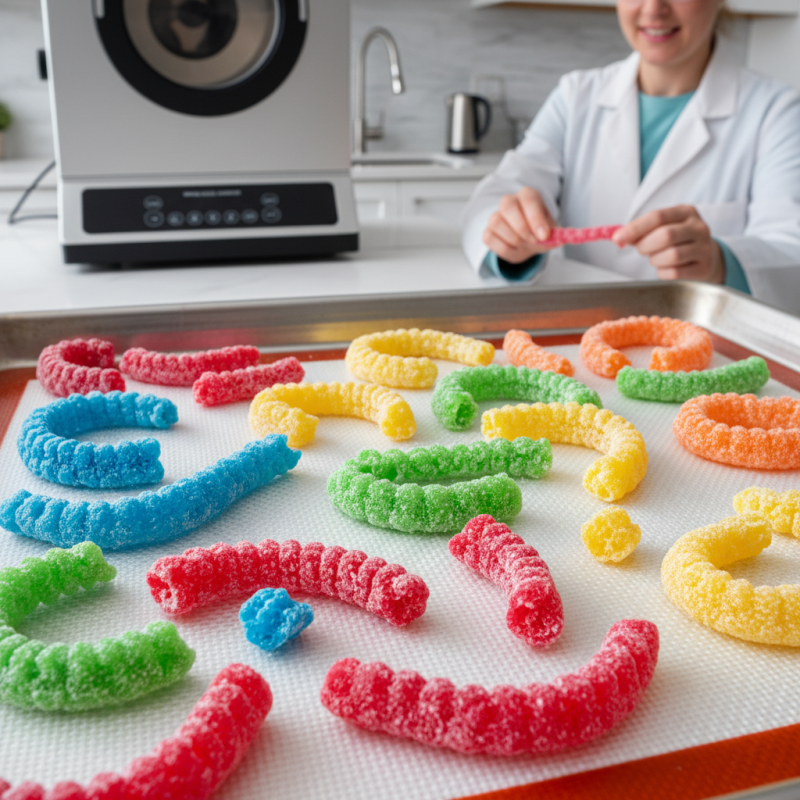
How to Make Freeze Dried Gummy Worms at Home?
Freeze Dried Gummy Worms have gained popularity in recent years. The freeze-drying process preserves flavor and texture. According to a report from the Snack Food Association, the freeze-dried snacks market is expected to grow significantly in 2024.
Dr. Emily Foster, a food scientist, states, “The appeal of freeze dried gummy worms lies in their unique crunch and vibrant flavors.” This innovation attracts health-conscious consumers and candy lovers alike. The industry is witnessing a trend where traditional gummy candies are reimagined.
Many home enthusiasts are eager to try making freeze dried gummy worms. However, achieving the perfect texture can be challenging. Mistakes can happen, such as uneven drying or overexposure to heat. Reflecting on these aspects can enhance the freeze-drying experience.
Understanding Freeze Drying and Its Benefits for Gummy Worms
Freeze drying is an intriguing method that preserves food while retaining its flavors and nutrients. When applied to gummy worms, the process creates a crunchy, flavorful snack that retains some of the original taste. The freeze-drying process removes moisture without cooking the candy. This helps keep the gummy worms vibrant and appealing.
The benefits of freeze-drying gummy worms are numerous. For one, they become shelf-stable and can last for months without spoilage. This method also enhances the texture, turning chewy candies into crispy bites that dissolve in your mouth. You may notice that the flavor intensifies in freeze-dried treats. However, achieving the perfect freeze-dry may require practice.
Some people may find the process a bit tricky. If you don't have the right equipment or settings, the results can be off. For example, a too-long freeze can lead to less flavor. Keeping track of time and temperature is crucial. Experimenting with various gummy worms also adds unique results that can be surprising.
Freeze Dried Gummy Worms Nutrient Comparison
This chart compares the nutritional content of fresh gummy worms to freeze dried gummy worms. Freeze drying helps reduce some of the sugar content and increases protein retention, making it a beneficial method for preserving gummy worms while enhancing their nutritional profile.
Essential Equipment for Home Freeze Drying of Gummy Worms
Creating freeze-dried gummy worms at home is a fun and rewarding process. To successfully achieve this, you need specific equipment. A quality freeze dryer is essential. These machines can be an investment, with prices ranging from $2,000 to over $5,000. Make sure to research options well. A vacuum sealer is also beneficial for preserving the gummy worms after drying.
When preparing gummy worms for freeze drying, soy or gelatin-based options tend to yield the best results. A report from the Institute of Food Technologists indicates that gummies have high sugar content, which helps during the freeze-drying process. Freeze drying essentially removes moisture, maintaining flavor and shape.
Tips: Use molds for consistent sizes. This aids even drying. It’s also vital to cut the worms into smaller pieces. Larger pieces may not dry evenly, leading to uneven texture. Monitor the drying process closely; sometimes, additional drying time is needed. As you experiment, take notes on what works best and adjust your approach. Each batch can be a learning experience!
Step-by-Step Guide to Preparing Gummy Worms for Freeze Drying
Freeze drying gummy worms at home is a fun and creative kitchen project. To start, you'll need fresh gummy worms, a freeze dryer, and some time. Begin by arranging the gummy worms on the trays, ensuring they don't overlap. This step is vital. Overlapping can lead to uneven drying. According to industry experts, foods lose around 90-95% of their moisture through freeze drying. This process enhances taste and texture.
Once the gummy worms are arranged, set your freeze dryer to the appropriate settings. The ideal temperature for freeze drying gummy candies is typically around -40°F. Monitor the process, which may last up to 24 hours. It’s essential to check regularly. If the gummies appear soggy after the cycle, they need more time in the dryer. Industry studies show that patience can yield a crunchy, delightful snack when done right.
After they are fully dried, store them in airtight containers. This prevents moisture from ruining your efforts. Store them in a cool, dark place to extend shelf life. Sometimes, things might not go as planned. Perhaps they could turn out too hard or still chewy. Adjusting the drying time or temperature may help with future batches. Experimentation is key here, as personal preference varies.
Optimal Freeze Drying Conditions: Time and Temperature Parameters
When making freeze-dried gummy worms at home, understanding the optimal freeze-drying conditions is crucial. The right time and temperature can significantly affect the final product. Generally, lower temperatures work best for freeze drying. Aim for around -40°F to -50°F. At this temperature, moisture removal happens more efficiently.
Timing is equally important. For gummy worms, it usually takes 24 to 48 hours to achieve the desired texture. Checking the consistency regularly is vital. You want them to be dry yet chewy. If they feel sticky or moist, they need more time.
Experimentation might be necessary. Not every batch will turn out perfect. Some gummies might lose their shape or become overly hard. It’s part of the learning process. Don't hesitate to adjust the temperature and time based on the results you see. Keep notes on what works and what doesn’t. Modifying these parameters can lead to improved outcomes. Enjoy the journey of refining your freeze-drying skills!
Storage Tips for Preserving Freeze Dried Gummy Worms' Quality
When it comes to preserving freeze dried gummy worms, proper storage is vital. According to industry reports, moisture and air exposure can significantly reduce the quality of freeze-dried foods. It's essential to keep gummy worms away from humidity. Consider using vacuum-sealed containers for storage, as they effectively minimize air exposure. Aim to maintain a temperature below 75°F for optimal preservation.
One key tip is to add oxygen absorbers to your storage containers. This simple addition can extend shelf life, making your gummy worms last longer. Ensure the containers are opaque to block light, which can degrade quality. Remember, proper labeling with the date is crucial for tracking freshness.
Another important aspect is checking the seals. Sometimes, containers may not seal properly, allowing air in. Periodically inspect your stored gummies, and look for any signs of moisture or spoilage. Adjusting storage methods, based on these observations, can help maintain your gummy worms in peak condition, preventing unexpected texture changes or flavor loss.