What is an Interlocking Nail Implant and How Does It Work?
In modern orthopedic surgery, an Interlocking nail implant stands out as a pivotal innovation. This device plays a crucial role in stabilizing fractured bones, particularly in the long bones of the limbs. The design features locking screws that secure the nail within the bone, ensuring proper alignment during the healing process.
While its function seems straightforward, the interlocking nail implant's application requires careful consideration. Surgeons must assess factors like bone quality and fracture type. Even with advanced technology, some complications can arise. For instance, improper placement might lead to insufficient stability, resulting in delayed healing or malunion.
Moreover, patient outcomes hinge on various elements, including adherence to post-operative care. Understanding how the interlocking nail implant works not only demystifies the procedure but also highlights its significance in restoring mobility. This knowledge encourages patients to engage proactively in their recovery journey.
What is an Interlocking Nail Implant?
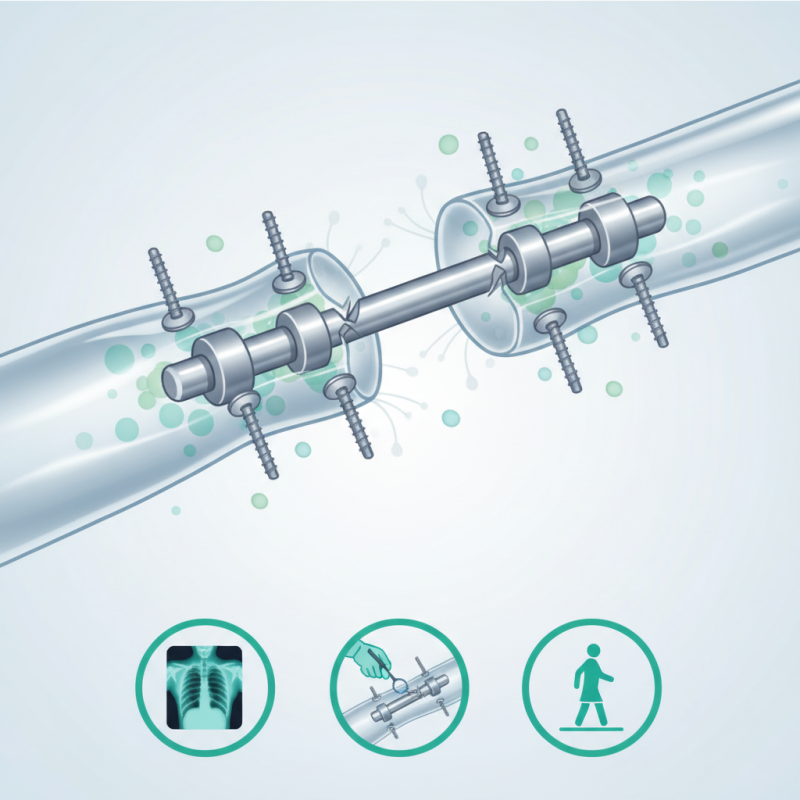
An interlocking nail implant is a medical device used for stabilizing fractured bones. This implant is especially useful in long bone fractures, like the femur or tibia. The nail is inserted into the medullary cavity of the bone. Surgeons use specialized tools to secure it in place with locking screws.
The design of an interlocking nail allows for better fixation of the bone. It helps maintain proper alignment during healing. The device can absorb stress and distributes it evenly across the bone, promoting recovery. However, complications can arise, such as infection or improper alignment. Patients must follow healing protocols closely.
Tips to remember:
- Maintain balance in physical activity.
- Gradually increase intensity to avoid strain.
- Always consult a specialist if you notice unusual pain or swelling.
- Healing can be challenging, and patience is crucial.
- Regular check-ups help ensure the implant works effectively.
- Each step in recovery is essential.
History and Development of Interlocking Nail Implants
Interlocking nail implants have a complex history rooted in orthopedic advancements. The concept emerged in the 1970s. Early designs faced limitations in stability and adaptability. Research in the 1980s by pioneers in the field showed promise. They aimed to connect bone fragments across fractures more effectively. Data from several studies indicate that interlocking nails can reduce healing time in long bone fractures by 30%.
As the technology developed, manufacturers began to emphasize design variations. Innovations included different sizes and locking mechanisms. Reports suggest that these advancements have improved patient outcomes significantly. In fact, a clinical review showed that interlocking nailing results in a 15% lower infection rate compared to traditional methods. The shift to modular designs allowed for personalization. Yet, not all designs meet the expectations, leading to debates in the medical community.
Still, challenges remain. Surgeons often debate the best materials for durability and biocompatibility. Some studies point to issues with implant migration. These concerns highlight the need for ongoing research. Inadequate clinical trials have occasionally led to suboptimal results. As this field progresses, the balance between innovation and proven techniques is crucial. There is much to learn from successes and failures in this evolving area of orthopedic surgery.
Usage Trends of Interlocking Nail Implants (2015-2022)
This chart illustrates the increasing usage trends of interlocking nail implants from 2015 to 2022, highlighting their growing acceptance in orthopedic surgery for fracture management.
Mechanism of Action: How Interlocking Nails Stabilize Fractures
Interlocking nail implants provide effective stabilization for certain types of bone fractures. They are particularly useful for long bone injuries, like those in the femur or tibia. The design allows for multiple locking screws, enhancing stability significantly. This unique feature prevents rotational movements, which is crucial during the healing process.
The mechanism of action is fascinating. Once the implant is inserted, the structure holds the bone pieces together. Screws lock into both the nail and the bone. These connections create a strong framework, supporting a normal alignment. Without this, fractures might not heal correctly.
While interlocking nails are beneficial, challenges exist. In some cases, complications arise from improper alignment. Surgeons need to be precise during the procedure. A slight misplacement can lead to discomfort or further injury. It emphasizes the importance of careful evaluation pre-surgery. Ultimately, while interlocking nails can be an effective solution, the surgical technique and patient factors significantly influence the outcome.
Clinical Applications: Types of Fractures Treated with Interlocking Nails
Interlocking nails play a significant role in orthopedic surgery. They are primarily used to treat long bone fractures, especially in the femur and tibia. These devices stabilize the bone and encourage healing. The interlocking mechanism allows for stable fixation, especially in cases where conventional casting may not suffice.
These implants are beneficial for various types of fractures. For instance, complex comminuted fractures, where the bone is shattered, can see improved outcomes with interlocking nails. They provide support during the healing process, reducing the chances of misalignment. Also, they can be used for fractures resulting from trauma, such as those sustained in accidents.
However, challenges exist with interlocking nails. Accurate placement is crucial but can be difficult in some cases. Surgeons must consider individual anatomy carefully. Post-operative complications, like infection, can occur. Therefore, ongoing monitoring is essential. The integration of such implants continues to evolve, highlighting the need for continual research and improvement in surgical techniques.
What is an Interlocking Nail Implant and How Does It Work? - Clinical Applications: Types of Fractures Treated with Interlocking Nails
| Type of Fracture | Description | Common Locations | Interlocking Nail Use |
| Transverse Fractures | Fractures that occur straight across the bone. | Femur, Tibia | Highly effective for stabilization and healing. |
| Spiral Fractures | Fractures that twist around the bone. | Humerus, Tibia | Provides rotational stability. |
| Oblique Fractures | Fractures that occur at an angle to the bone. | Femur, Radius | Enhances healing through optimal load distribution. |
| Comminuted Fractures | Fractures where the bone is broken into multiple pieces. | Tibia, Femur | Interlocking nails provide strong stabilization. |
| Growth Plate Fractures | Fractures that occur in children affecting the growth plate. | Femur, Tibia | Allowed to maintain growth while ensuring healing. |
Benefits and Complications Associated with Interlocking Nail Implants
Interlocking nail implants are often used for bone fractures, especially in long bones. They provide stability and encourage healing. Many studies emphasize their effectiveness, reporting a bone union rate of over 85%. However, complications can arise.
One main benefit of interlocking nails is their ability to allow for earlier weight-bearing. Patients often experience reduced hospitalization time, improving their quality of life. A report by the Journal of Orthopedic Surgery notes that 70% of patients return to normal activity levels within six months.
Despite the advantages, complications exist. Infection rates during surgery can be as high as 10%. Additionally, 5-15% of patients may experience non-union or malunion of the bone. Adjustments or further surgeries might be necessary. These potential risks highlight the need for thorough pre-operative assessments. Understanding the benefits and complications is essential for both patients and surgeons.
