50% Response rate
Herbal Products move through long, layered supply chains before reaching a manufacturer’s receiving dock. A dried root may pass through a collector, processor, exporter, and broker. At each handoff, its identity, handling history, or origin can become harder to verify. Global sourcing therefore calls for more than comparing prices and lead times.
The World Health Organization’s 2019 Global Report on Traditional and Complementary Medicine found that 170 of its 194 Member States reported use of traditional medicine. This figure describes reported national use, not herbal-product sales or demand. Still, it highlights why buyers need reliable evidence for botanical identity, quality, and supply continuity. The FAO’s 2020 Global Forest Resources Assessment also reports that forests cover about 31% of the world’s land area. For wild-collected ingredients, sourcing decisions can affect ecosystems as well as businesses.
A credible sourcing process starts with specifics: the accepted botanical name, plant part, country and region of origin, and cultivation or collection method. It also checks batch records, contaminant testing, supplier controls, and applicable import requirements. A polished certificate is useful, but it cannot replace consistent records or independent verification. Small gaps matter. And supplier claims deserve questions. No checklist makes every supply chain fully transparent; that is an uncomfortable limitation buyers should acknowledge. The following ten tips offer a practical framework for assessing suppliers, comparing documentation, and spotting risks before an order is placed.
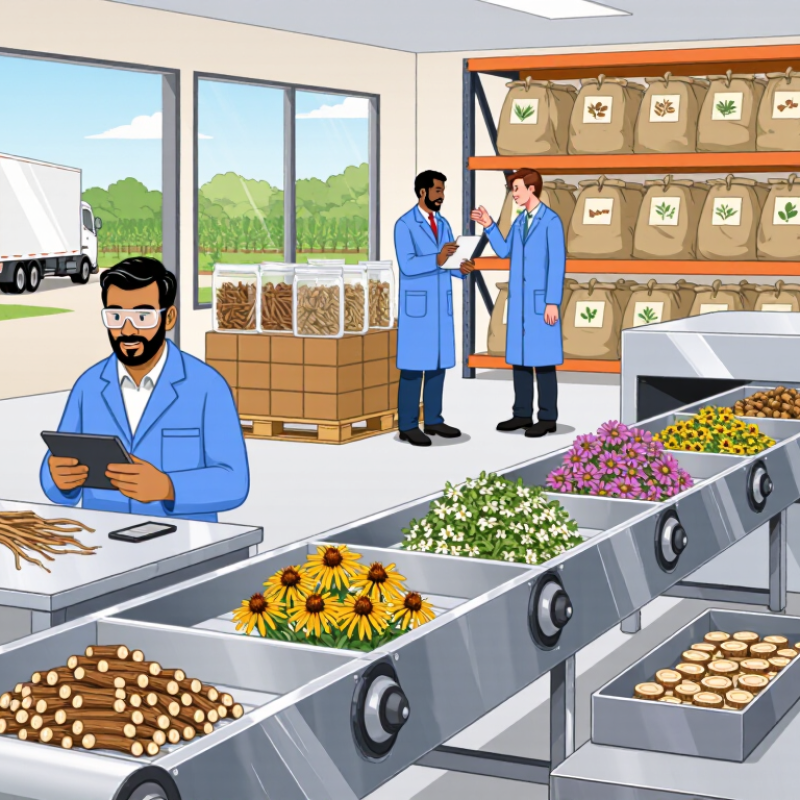
Before contacting growers or processors, define the herb’s intended form, plant part, and use. Specify whole leaf, cut material, powder, or extract, then describe acceptable moisture, color, aroma, and particle size. A tea supplier may need intact leaves, while a capsule maker may require consistent powder. Set measurable criteria for identity, purity, contaminants, and batch variation with a qualified quality professional. Vague requests invite mismatched samples.
Define your target market by customer and sales channel, not just country. A product for specialty grocers may need different packaging and sensory qualities than one supplied to manufacturers. Check local labeling, documentation, and testing expectations before sampling; these can vary and change. Tip: Create a one-page specification sheet with a sample photo, intended use, target pack size, and required records. This saves time.
Compare suppliers’ records for origin, harvest season, drying method, storage, and lot traceability. Request representative samples and relevant test results, then assess each against the same written criteria. A common mistake is focusing on price too early; that can hide differences in cleanliness or consistency. Leave room to revise. Your first specification may miss something, and feedback from buyers can reveal assumptions worth reconsidering.
Mapping a supply base starts with the plant, not the country name. Record its accepted botanical name, growing altitude, rainfall window, and harvest season. A supplier in a producing region may still aggregate material from several districts. Ask for farm or collection-site coordinates, harvest records, and batch-level traceability. Maps can mislead.
Demand data helps prioritize research, but it does not prove a region can supply consistent quality. The World Health Organization’s 2019 Global Report on Traditional and Complementary Medicine found that 170 of 194 Member States reported using these practices. In the United States, retail sales of herbal supplements reached $12.014 billion in 2022, rising 9.7% year over year, according to the American Botanical Council’s HerbalGram market report. These figures signal broad demand; neither identifies a suitable growing site. Use UN Comtrade or ITC Trade Map to compare trade flows, then verify product classifications with a customs specialist. Ask suppliers for recent lab results, origin documents, and evidence of harvest controls. Ask for evidence.
A practical network map should link growers, processors, exporters, and testing laboratories, noting transport routes and seasonal bottlenecks. Compare samples from different harvests, not just one polished shipment. I would treat supplier questionnaires as a starting point, not proof; paperwork can look complete while field-level traceability remains weak. Include a plan for crop failures and changing rainfall, and revisit it each season.
Global herbal sourcing starts with evidence, not a polished sales deck. WHO’s 2019 Global Report on Traditional and Complementary Medicine found that 170 of 194 Member States reported using these approaches. That broad use makes dependable sourcing important. Verify the supplier’s legal registration, quality-system documents, audit scope, and relevant certifications directly with their issuers. A certificate can be genuine yet cover a different site or product.
Ask for traceability records linking each lot to its botanical species, plant part, growing region, harvest period, and processing site. Then match those records to the purchase documents and test results. For example, a lot code should lead back to a named source region, not merely “Asia.” Request risk-based identity and contaminant testing from a qualified laboratory. Paperwork can look reassuring. It is not proof by itself.
Check compliance for the destination market and the product’s intended category; requirements can differ by jurisdiction and use. Confirm that labels, permitted claims, specifications, and import documents align before shipment. Keep dated records of reviews and changes. A weak point deserves a second look: supplier questionnaires may miss subcontractors, especially during peak harvest. Ask who actually dries, stores, and transports the material, and verify those steps through records or an audit.
| # | Sourcing Tip | What to Verify | Useful Evidence or Records | Practical Check |
|---|---|---|---|---|
| 1 | Confirm supplier credentials | Check that the supplier is legally established and holds permits or registrations required for its activities and location. | Business registration, applicable operating permits, facility details, and current quality-system documentation. | Confirm documents with the issuing authority where verification services are available; check that names, addresses, and validity dates match. |
| 2 | Assess cultivation and collection practices | Review how the plant is cultivated or wild-collected, harvested, dried, stored, and handled to reduce contamination and mix-ups. | Farm or collection-site records, harvesting procedures, training records, and relevant good agricultural and collection practices documentation. | Compare practices with applicable guidance, such as WHO guidance on good agricultural and collection practices for medicinal plants, and assess the actual site when feasible. |
| 3 | Establish end-to-end traceability | Determine whether each lot can be traced from its botanical source through processing, packaging, and shipment. | Lot numbers, harvest dates, origin records, processing logs, transfer records, and shipment documents. | Request a sample lot-trace exercise and check that records link the incoming plant material to the finished product and relevant suppliers. |
| 4 | Verify botanical identity | Confirm the accepted botanical name, plant part, and any relevant variety or chemotype; common names alone can be ambiguous. | Product specification, authenticated reference material, identity test results, and documented sampling procedures. | Ensure the identity method is suitable for the material and processing stage; agree on acceptance criteria before purchasing. |
| 5 | Check testing and certificates of analysis | Review risk-based testing for identity, strength or composition where relevant, and contaminants such as heavy metals, pesticides, microbes, or mycotoxins. | Lot-specific certificate of analysis, test methods, specifications, and laboratory accreditation scope when applicable. | Check that the report identifies the tested lot, uses appropriate methods, reports results against agreed limits, and comes from a qualified laboratory. |
| 6 | Review market-specific regulatory compliance | Identify the rules for the product’s intended category, ingredients, claims, manufacturing, labeling, and destination market. | Product specifications, ingredient and label review, manufacturing records, and documented regulatory assessment for each target market. | Do not assume one market’s approval applies elsewhere; confirm current requirements with the relevant regulator or a qualified regulatory professional. |
| 7 | Confirm organic claims properly | Check whether an organic claim is permitted for the destination market and whether certification covers the relevant product, operation, and supply-chain activities. | Current organic certificate, product or scope listing, certificate number, and transaction or import documents when required. | Verify certificate status and scope with the issuing certification body or official database; do not rely on a logo or an expired certificate alone. |
| 8 | Check conservation and trade restrictions | Assess whether the plant species or source is subject to protected-species, access-and-benefit-sharing, or other collection and trade controls. | Species identification, harvest or collection authorization, export permits, and CITES documents when the species and trade require them. | Check applicable species listings and national rules before shipment; CITES requirements depend on the listed species and the specific trade. |
| 9 | Validate import and shipping documents | Confirm that the product can be legally imported and that documentation matches the goods, origin, and destination requirements. | Commercial invoice, packing list, certificate of origin where required, customs classification, and phytosanitary or other certificates when applicable. | Ask the destination-country authority or customs broker which documents are required; phytosanitary requirements vary by commodity and country. |
| 10 | Use ongoing supplier monitoring | Review changes to sources, subcontractors, processes, specifications, test results, and regulatory status throughout the relationship. | Quality agreement, change-control notices, audit findings, corrective-action records, complaint logs, and periodic performance reviews. | Set risk-based review intervals and define when a change requires requalification, additional testing, or approval before shipment. |
Note: Regulatory, import, certification, and testing requirements vary by product and destination market. Confirm applicable requirements before placing an order or shipping goods.
When sourcing herbal products across borders, begin with identity, not appearance. Ask for the accepted botanical name, plant part, growing region, and harvest season. A pale powder can look consistent while containing a different plant. Looks can mislead. Request lot-specific records linking farms, processors, and finished material; vague origin statements are hard to verify.
Safety needs more than a certificate. Review testing for microbial contamination, heavy metals, pesticide residues, and other risks relevant to the plant and its processing. Check that the laboratory uses suitable methods and can provide results tied to the exact lot. A certificate is evidence, not a guarantee. Compare it with your own specifications, and consider independent verification when risk or volume warrants it. Keep retained samples and investigate results that sit close to limits. This takes time.
Sustainability claims should be concrete. Ask how harvesting affects local ecosystems, whether cultivation is traceable, and how workers and source communities are treated. Look for records, not broad promises. Check import requirements in the destination market, since they differ and can change. No document answers every question; suppliers may have gaps, and buyers can miss things too. Revisit suppliers regularly, document concerns, and improve the checklist as new evidence emerges.
Tip 1: Define the plant species, plant part, origin, harvest period, and acceptable moisture range in the purchase agreement. Request a representative sample and agree on how incoming lots will be checked. Include payment milestones, delivery windows, and a clear process for handling rejected or delayed goods. Keep records. A useful specification should be practical enough for both sides to follow, though I have seen paperwork look clearer than the product itself.
Tip 2: Plan logistics before confirming an order. Ask suppliers how products are dried, packed, stored, and protected from heat or moisture during transit. Map the route, estimate transit time, and identify backup storage if a shipment arrives early or late. Confirm that shipment documents match the product and destination requirements. Small details matter. A damp carton can undo careful handling upstream.
Tip 3: Monitor supplier performance over time. Track delivery dates, inspection results, batch consistency, and how quickly issues are resolved. Review those measures regularly with the supplier, and agree on corrective steps when results slip. Keep a small reserve for critical ingredients, but avoid stockpiling beyond your storage capacity. The plan may need adjustment; seasonal supply rarely behaves like a neat spreadsheet.