Top 5 Animal Studies That Changed Our Understanding of Nature?
Animal studies have greatly impacted our understanding of nature. Through rigorous research, animals have revealed complexities of ecosystems and behaviors. These studies illustrate how interconnected life is. For instance, the social structures of wolves provide insights into pack dynamics. Such observations help biologists grasp the balance in nature.
Yet, animal studies are not without controversy. Ethical questions arise regarding how we treat and experiment on animals. Not all findings are easily applicable to human contexts, leaving room for doubt. Observing behavior in controlled environments may not reflect real-world conditions. These elements highlight the need for careful consideration in animal studies.
Despite the challenges, certain studies stand out. They have reshaped our perceptions of wildlife and conservation. For example, understanding migration patterns has led to better protection efforts. Each Animal study contributes to a larger narrative about survival and adaptation in nature.
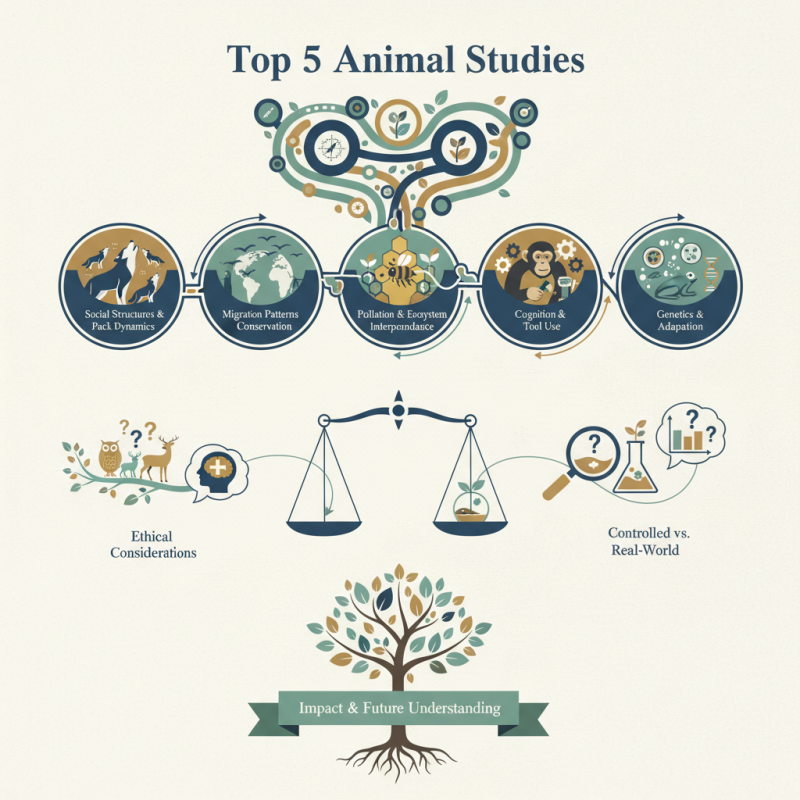
Top 5 Groundbreaking Animal Studies Transforming Ecological Science
Animal studies have transformed our understanding of ecological systems. They reveal intricate relationships within ecosystems. For instance, research on beaver populations shows their role in creating wetlands. These wetlands support diverse plant and animal life. Beavers engineer their environment, impacting water flow and habitat availability.
Another groundbreaking study focused on wolves in Yellowstone. After their reintroduction, researchers noted changes in the entire ecosystem. Elk populations declined, allowing willow and aspen to thrive. This shift transformed landscapes and increased biodiversity. It’s fascinating how one species can catalyze such widespread ecological change.
Yet, these studies prompt us to reflect. Are we fully accounting for these connections in conservation efforts? How often do we overlook small species that play crucial roles? Nature is complex, and our understanding is still evolving. Every research effort uncovers new questions. Engaging with these findings pushes us to think critically about our role in the ecosystem.
Top 5 Groundbreaking Animal Studies Transforming Ecological Science
| Study Title | Animal Species | Key Findings | Impact on Ecology | Year of Publication |
| The Effects of Wolf Reintroduction on Ecosystem Dynamics | Gray Wolf (Canis lupus) | Restored balance in elk population, reduced overgrazing | Enhanced biodiversity and ecosystem health | 2015 |
| The Role of Bees in Pollination Efficiency | Honeybee (Apis mellifera) | Higher crop yields directly linked to bee activity. | Critical understanding of pollinator importance in agriculture | 2018 |
| Marine Mammals and Climate Change Indicators | Various (e.g., seals, whales) | Changes in migration patterns and feeding behaviors correlated with sea temperature | Insight into climate change effects on marine ecosystems | 2020 |
| The Behavior of Ants and Soil Health | Ants (Formicidae family) | Ant activity improves soil aeration and nutrient cycling | Reinforcement of the role of invertebrates in soil ecology | 2017 |
| Influence of Crows on Ecosystem Processes | American Crow (Corvus brachyrhynchos) | Seed dispersal patterns increase plant diversity | Understanding animal behavior in ecosystem resilience | 2019 |
The Impact of Elephant Behavior on Savannah Ecosystems: A 30-Year Study
The impact of elephant behavior on savannah ecosystems has been profound. A 30-year study in Africa reveals that elephants shape their environment. They create water holes and clear paths through dense vegetation, promoting biodiversity. Their foraging habits influence the growth of grasses and shrubs, allowing other species to thrive.
In a single year, one elephant can create up to 50 water holes. This provides sustenance for various animals during dry seasons. According to the African Elephant Database, elephant activities support around 400 other species in these habitats. However, the relentless pressure of poaching raises concerns. As elephant populations dwindle, so does the delicate balance they help maintain.
Yet, the study also uncovers a troubling reality. Elephant herds exhibit increasing stress due to human encroachment. Researchers noted changes in their social structures. The loss of matriarchs can lead to chaotic behavior, further disrupting the ecosystem. Contemplating this dynamic highlights the need for conservation efforts. We must ask ourselves, what will happen if these giants disappear?
Canine Olfactory Abilities: Revolutionizing Search and Rescue Operations
Canine olfactory abilities are truly remarkable. Dogs can detect scents that are undetectable to humans. Their sense of smell is 10,000 to 100,000 times more sensitive. This ability is revolutionizing search and rescue operations across the globe.
In disaster situations, time is critical. Trained dogs can locate missing individuals quickly. They work tirelessly, often in harsh conditions. A dog's nose picks up on faint scents carried by the wind. This skill can make the difference between life and death. However, it is not always foolproof. Sometimes, scents can be mixed or lost in the chaos.
Handlers must trust their dogs while being aware of these limitations. Canine training is essential for effective operations. Each dog must learn to distinguish various scents. But there are challenges in training. Not all dogs have the same abilities. Some may excel, while others may struggle. This inconsistency raises questions about the optimization of canine teams. Understanding these factors can improve rescue missions and community safety.
Canine Olfactory Abilities: Revolutionizing Search and Rescue Operations
This chart illustrates the remarkable olfactory detection capabilities of dogs in various search and rescue operations. The data represents the average time taken (in minutes) for canine teams to locate specific types of scents in different environments.
Honeybee Communication and Its Implications for Pollination Ecosystems
Honeybees are fascinating creatures. Their communication methods are complex and intriguing. They use dance to convey information about food sources. This dance, called the waggle dance, allows them to share details. It includes direction and distance to flowers. Surprisingly, this sophisticated method reveals their profound role in ecosystems.
Pollination is not just a task; it's a lifeline. Honeybees pollinate nearly one-third of the food we consume. Their effectiveness is a reminder of our interconnectedness with nature. Without these insects, many plants would struggle to reproduce. This reliance raises questions. Are we doing enough to protect them? Climate change, pesticides, and habitat loss threaten their existence. Each loss is significant for our food systems.
Understanding honeybee communication enlightens us about ecological balance. It shows us the beauty of nature’s design. Yet, it also highlights the fragility of these systems. We must reflect on our impact and take responsibility. Pollinators, like honeybees, deserve our care and respect. Protecting them is essential for a sustainable future.
The Role of Wolves in Regulating Biodiversity: The Yellowstone Effect
Wolves play a crucial role in ecosystems. Their presence in Yellowstone National Park transformed the area. The reintroduction of wolves in the 1990s had surprising effects. It didn't just affect elk populations; the entire ecosystem shifted.
With fewer elk grazing, vegetation flourished. Trees and shrubs grew taller, offering habitats for birds and other species. Rivers began to stabilize. Without excessive grazing, banks regained their structure. This process, known as trophic cascades, illustrates the interconnectedness of nature.
The Yellowstone effect shows how apex predators can regulate biodiversity. Yet, it also raises questions. How do we balance predator and prey? Ecosystems are complex, and human interventions can lead to unforeseen outcomes. Nature often reminds us of its unpredictability and resilience.
Conclusion
The article "Top 5 Animal Studies That Changed Our Understanding of Nature" highlights significant research in animal studies that have profoundly impacted ecological science. One landmark study focuses on elephant behavior, demonstrating how these majestic creatures influence savannah ecosystems over a 30-year period. Another groundbreaking animal study explores the extraordinary olfactory capabilities of dogs, which have transformed search and rescue operations.
Additionally, the communication methods of honeybees are examined for their critical role in pollination ecosystems. The article also discusses the importance of wolves in regulating biodiversity, exemplified by the transformative Yellowstone effect. Lastly, research on marine mammals provides valuable insights into the impacts of climate change on oceanic life. Collectively, these studies emphasize the essential role animal behavior plays in shaping and maintaining ecological balance.
