What Are the Best Curcumin Supplements in 2026?
Choosing Curcumin Supplements in 2026 takes more than comparing bright labels or large milligram numbers. Curcumin is a compound found in turmeric, but products differ in formulation, serving size, and quality testing. Some include ingredients intended to improve absorption; that does not automatically make them the right choice for every person.
This guide examines what shoppers can verify: clear ingredient lists, transparent dosing, independent quality testing, and practical details such as capsule size and cost per serving. We also consider whether a product explains its formulation plainly, rather than leaning on sweeping wellness promises. Small details matter. A label should tell you what is inside.
Evidence on curcumin’s potential uses is still developing, and supplement quality can vary. A polished package is not proof of effectiveness. Nor does a higher dose necessarily mean a better product. We’ll note where claims deserve caution and where information is limited, because even a careful comparison cannot identify one universally best supplement. That uncertainty is worth keeping in view.
Curcumin may interact with some medicines, and supplements may not suit everyone. People who take prescription drugs, have ongoing health conditions, or are pregnant or breastfeeding should ask a qualified healthcare professional before use. Use this overview as a starting point, not a substitute for personalized advice.
What Curcumin Supplements Contain and How They Work
What Are the Best Curcumin Supplements in 2026?
What Curcumin Supplements Contain and How They Work
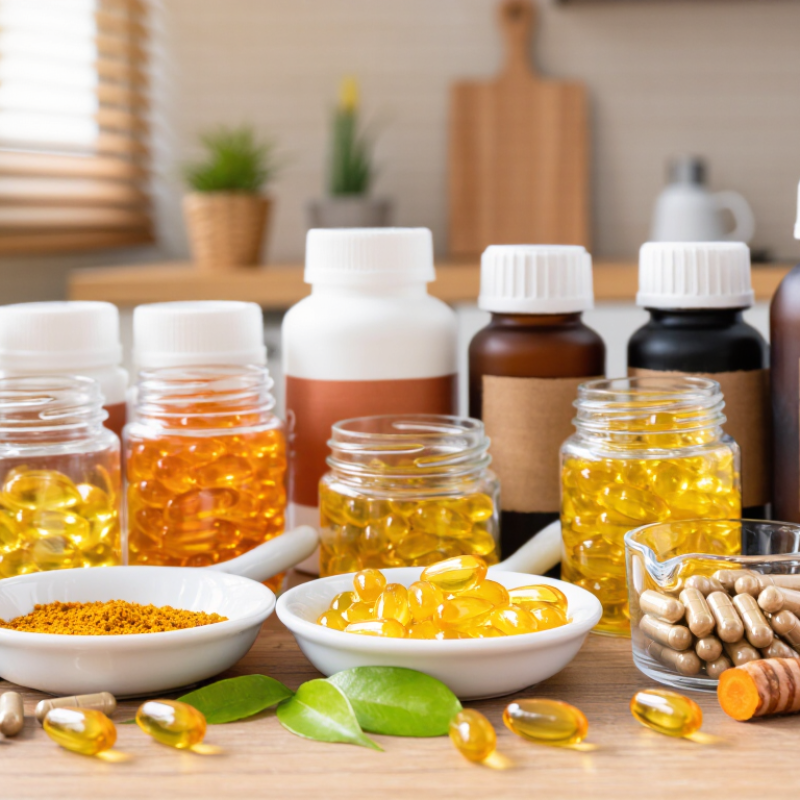
Curcumin is one of the main compounds in turmeric, the golden spice often stirred into soups and rice. Supplements may contain turmeric powder, concentrated turmeric extract, or measured curcuminoids. Check the label: the amount of turmeric is not always the amount of curcumin. Some formulas add oils, phospholipids, or piperine, a black-pepper compound intended to improve absorption. Small details matter.
Curcumin is poorly absorbed on its own, so different formulas can affect how much enters the bloodstream. In the body, it interacts with pathways involved in inflammation and oxidative stress. That sounds promising, but laboratory findings do not guarantee a noticeable benefit for every person. Human studies vary in dose, formulation, and outcome. The evidence is uneven, and curcumin is not a substitute for prescribed care.
For a practical check, compare the curcuminoid amount per serving and note any added ingredients. Piperine may affect how the body processes some medicines, so ask a pharmacist or clinician if you take regular medication. People with gallbladder problems or other health concerns should seek medical advice before use. A capsule may look simple, but its ingredients can matter. That distinction is easy to miss, even when reading carefully.
What Curcumin Supplements Contain
Turmeric powder typically contains about 2–8% curcuminoids; some standardized extracts contain around 95%. The chart plots the midpoint of the turmeric range (5%). Curcumin is poorly absorbed on its own, so some supplements combine it with piperine or use fat-based, phospholipid, or other delivery formats intended to improve absorption. Concentration and delivery claims do not by themselves establish clinical benefit.
How to Compare Curcumin Supplement Forms and Absorption
Curcumin is the best-known compound in turmeric, but the amount swallowed is not the amount the body absorbs. Standard turmeric powders may contain relatively little curcumin, while concentrated extracts list curcuminoids on the label. Check the serving size and the actual curcuminoid amount, not just the large number on the front. Labels can mislead.
Formulations differ. Some combine curcumin with piperine, a black-pepper extract that may increase absorption, but piperine can also affect how certain medicines are processed. Other products use phospholipids, micelles, or lipid-based carriers. These approaches aim to improve uptake, yet results from one formulation should not be assumed to apply to another. Evidence is still uneven.
Compare the full ingredient panel, dose, and testing information. Look for independent quality testing when available, and check whether the product identifies its extract clearly. A higher absorption claim does not automatically mean a better choice for every person. That matters. If you take prescription medicines, have a medical condition, or are considering regular use, ask a qualified health professional. I would also compare cost per labeled serving; it is an unglamorous detail, but easy to overlook.
What Are the Best Curcumin Supplements in 2026? — How to Compare Curcumin Supplement Forms and Absorption
“Best” depends on the formulation, dose, tolerability, and the quality of the evidence. This comparison describes common supplement forms, not individual products.
| Supplement form |
What it contains |
Absorption considerations |
Potential advantages |
Points to check |
| Standardized curcuminoid extract |
Concentrated turmeric compounds, often standardized to a high percentage of curcuminoids. |
Curcumin has low water solubility and is rapidly metabolized. A standard extract may produce limited blood levels compared with enhanced formulations. |
Provides a concentrated, clearly stated amount of curcuminoids and is widely studied. |
Check the curcuminoid amount per serving and serving size; “turmeric extract” alone does not specify curcumin content. |
| Curcumin with piperine |
Curcumin or turmeric extract combined with piperine, a compound from black pepper. |
Piperine can increase curcumin exposure. A small human study reported a substantial increase when piperine was taken with curcumin, but this does not establish better clinical outcomes for every product or person. |
May increase absorption without using a specialized delivery system. |
Piperine can affect drug-metabolizing enzymes and transporters, potentially altering medication levels. Check with a clinician or pharmacist if you take medicines. |
| Phospholipid complex (phytosome-type) |
Curcuminoids associated with phospholipids, which can help disperse them in the digestive environment. |
Human studies of some phospholipid formulations show higher curcuminoid exposure than conventional extracts. Results depend on the specific formulation and study methods. |
A delivery approach with human absorption research; may be useful for people comparing enhanced formulations. |
Compare the amount of actual curcuminoids—not just the total weight of the curcumin-phospholipid complex. |
| Micellar, emulsified, or other water-dispersible formulation |
Curcumin processed with carriers or delivery systems designed to disperse it more readily in water. |
Some formulations increase measured absorption, but results are formulation-specific and cannot automatically be generalized to all products in this category. |
May improve dispersibility and provide an alternative to standard extracts. |
Look for human data on the exact delivery system and clear labeling of curcuminoid content. |
| Turmeric root powder |
Ground turmeric root containing curcuminoids along with other naturally occurring root components. |
Usually less concentrated in curcuminoids than standardized extracts; curcumin from the powder is still poorly water-soluble. |
Less processed and includes a broader range of turmeric constituents. |
Do not assume the powder’s total weight equals the same amount of curcuminoids as a concentrated extract. Check the label for standardization. |
How to compare: Check the curcuminoid amount per serving, the delivery form, human evidence for that specific formulation, and any added ingredients. Absorption measurements are not the same as proof of improved health outcomes, and there is no single formulation proven best for everyone. Curcumin may cause digestive symptoms and may not be appropriate with certain medicines or health conditions; seek professional advice when relevant.
What Makes a Curcumin Supplement a Strong Choice in 2026
What Are the Best Curcumin Supplements in 2026?
What Makes a Curcumin Supplement a Strong Choice in 2026
A strong choice starts with a clear label: curcuminoid amount per serving, full ingredient list, and serving size. “Turmeric extract” alone tells you little. Look for independent testing of identity and contaminants, such as heavy metals. The FAO/WHO Joint Expert Committee on Food Additives sets curcumin’s acceptable daily intake at 0–3 mg per kilogram of body weight. This food-additive benchmark is not a supplement dose or treatment target. Keep that distinction in view.
Tips: Compare the actual curcuminoid amount, not just capsule weight. Check whether the product explains its absorption technology and provides evidence for it. A bigger number is not automatically better.
Curcumin is poorly absorbed in many conventional forms, and formulations can differ. The U.S. National Center for Complementary and Integrative Health notes that evidence for turmeric’s health effects remains limited. Be cautious with claims promising broad benefits. Enhanced-absorption products may also change exposure; discuss them with a clinician, especially if you take medicines or have liver concerns. A practical pick is transparent, independently tested, and modest in its promises. Labels still leave gaps.
How to Assess Curcumin Supplement Quality and Value
Assess value by checking the curcuminoid amount per serving, not just the total turmeric extract. A large capsule can contain mostly non-curcumin material. Look for clear ingredient quantities, serving directions, and a batch-specific certificate of analysis. Independent testing can check identity, strength, contaminants, and whether the product breaks down as expected. Details matter.
Absorption claims deserve careful scrutiny. A 2017 review in the Journal of Medicinal Chemistry reported that human studies often found very low or undetectable blood levels of curcumin, even at doses up to 12 grams daily. Formulations may differ, but a higher price or “enhanced absorption” label alone does not prove better results. Compare the evidence for the specific delivery form, along with the dose and cost per serving. That is not proof. It is a useful check.
Quality also means reading the full label for added ingredients and cautions, especially if you take medicines or have health concerns. The NIH’s National Center for Complementary and Integrative Health notes that supplement evidence and safety can vary. Ask a qualified health professional about personal risks. A polished label is not a clinical study, and even careful comparisons leave uncertainty.
Safety Considerations for Choosing and Using Curcumin Supplements
What Are the Best Curcumin Supplements in 2026?
Safety Considerations for Choosing and Using Curcumin Supplements
Curcumin supplements can differ in strength, ingredients, and how they are absorbed. Some include piperine, a black-pepper compound that may affect how certain medicines are processed. That matters. Ask a pharmacist or clinician before using curcumin if you take prescription drugs, especially blood thinners, or have a planned surgery.
Curcumin may cause nausea, reflux, or diarrhea, particularly at higher doses. Rare cases of liver injury have also been reported with turmeric or curcumin supplements. Stop taking the product and seek medical advice if you notice dark urine, yellowing skin, or unusual fatigue. People who are pregnant, breastfeeding, or have gallbladder or bile-duct problems should get professional guidance before use.
Read the full ingredient list, serving size, and suggested dose; a larger number is not automatically better. Independent testing can help verify a product’s contents, but it cannot prove that the supplement will work for you. A neat label can still leave questions. I would check for added ingredients and clear quality-testing information, then bring the container or a photo of its label to a healthcare professional.